Broken Tooth but No Pain? What to Do in Durham, NC
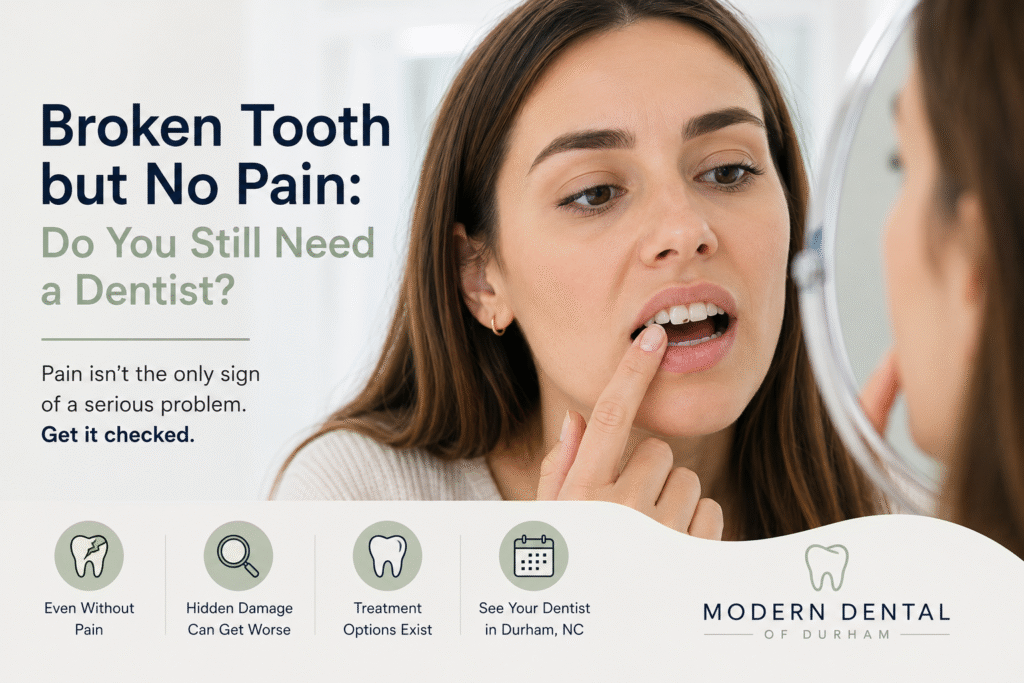
A broken tooth but no pain can be easy to ignore. You may notice a small piece missing, feel a rough edge with your tongue, or see a crack without experiencing sensitivity or discomfort. If it does not hurt, do you really need to see a dentist? In many cases, yes. Pain is only one sign that something is wrong with a tooth. A break can weaken the tooth, expose deeper layers, or create an area where bacteria can enter—even when you feel completely fine. Having the tooth evaluated early can help determine how serious the damage is and whether treatment is needed to prevent further problems. Why Can a Broken Tooth Have No Pain? A tooth can break without causing immediate pain for several reasons. A minor fracture may affect only the enamel, the hard outer layer of the tooth. Because enamel does not contain nerves, small chips and surface damage may not hurt. In other cases, a crack or break may not have reached the inner pulp where the tooth’s nerves and blood vessels are located. You might also have an existing filling or dental restoration that breaks while the tooth itself remains relatively comfortable. The absence of pain does not necessarily reveal how much damage has occurred. A dental examination can help determine what part of the tooth is affected. Broken Tooth but No Pain: Can You Wait to See a Dentist? Even with a broken tooth but no pain, delaying an evaluation may allow the damage to progress. A weakened tooth can break further when you chew. Cracks can also provide pathways for bacteria to reach areas that are harder to keep clean. If the inner portion of the tooth eventually becomes affected, symptoms such as sensitivity, discomfort when biting, swelling, or infection may develop. According to the American Dental Association’s MouthHealthy guidance on cracked teeth, cracked teeth can present in different ways, and treatment depends on the location and severity of the damage. Getting the tooth checked before symptoms worsen can give your dentist more information about whether the tooth needs treatment and what options are appropriate. What Can Cause a Tooth to Break? Teeth are strong, but several factors can make them more vulnerable to cracking or breaking. Biting hard foods or objects can cause sudden damage. Grinding or clenching can repeatedly place pressure on the teeth, while large fillings may leave less natural tooth structure available to withstand chewing forces. Decay can also weaken a tooth from within. In these situations, what appears to be a sudden break may be the result of damage that developed gradually. Normal wear, previous dental work, and trauma to the mouth can also contribute. What Should You Do After Breaking a Tooth? Contact your dentist to have the tooth evaluated, even if it is not currently painful. Until your appointment, avoid chewing hard or sticky foods on the affected side and continue gently brushing and flossing the area. If the broken edge feels sharp, be careful around your tongue and cheeks. If you find a piece of the tooth, keep it and bring it to your appointment. A broken tooth accompanied by significant bleeding, swelling, severe pain, facial trauma, or other concerning symptoms may require more urgent attention. How Does a Dentist Treat a Broken Tooth? Treatment depends on where the tooth broke, how much structure was lost, and whether the inner portion of the tooth has been affected. For a small cosmetic chip, dental bonding may be enough to restore the tooth’s shape. A veneer may be considered for certain cosmetic damage affecting a front tooth. When more tooth structure is compromised, a dental crown may be recommended to restore and protect the remaining tooth. Damage involving the pulp may require additional treatment before the tooth can be restored. This is why two teeth that look similarly broken may require very different treatment plans. Can a Broken Tooth Get Worse Over Time? Yes. Once part of the tooth has been compromised, normal chewing forces can place additional stress on the remaining structure. A small fracture may stay relatively stable, or it may extend and lead to a larger break. Food and bacteria can also collect around damaged areas, potentially increasing the risk of decay or infection. Waiting for pain to appear is therefore not the best way to determine whether a broken tooth needs attention. When Is a Broken Tooth a Dental Emergency? Not every broken tooth requires emergency treatment, but certain symptoms should be taken more seriously. Seek prompt dental care if the break is accompanied by severe or worsening pain, swelling, uncontrolled bleeding, signs of infection, or significant trauma to the mouth or face. A tooth that has been knocked loose or displaced also requires timely evaluation. Even without those symptoms, schedule an appointment so your dentist can assess the damage and recommend an appropriate next step. Broken Tooth but No Pain? Get It Checked in Durham, NC A broken tooth but no pain may seem harmless, but comfort does not always mean the tooth is healthy or structurally sound. Identifying the extent of the damage early may help prevent a small problem from becoming more complicated. At Modern Dental of Durham, our team can examine the affected tooth, determine the extent of the damage, and discuss treatment options based on your oral health and individual needs. Have a broken or damaged tooth? Request an appointment with Modern Dental of Durham to have it evaluated. Request an Appointment at Modern Dental of Durham
Dentist Near Me: 6 Things to Consider Before Choosing
Finding the right dentist isn’t just about choosing the closest office to your home. A great dental experience comes down to finding a practice that fits your needs, makes you feel comfortable, and offers the services and support you’re looking for. If you’ve recently searched for “dentist near me,” here are a few important things to consider before scheduling your first appointment. 1. Check the Services They Offer Not every dental office provides the same treatments. Some focus primarily on preventive care, while others offer services like dental implants, Invisalign, cosmetic dentistry, or restorative treatments. Choosing a practice that offers a wide range of services can make it easier to receive consistent care in one location. 2. Read Reviews and Look for Patterns Online reviews can provide valuable insight into patient experiences. Rather than focusing on a single review, look for recurring themes such as: Friendly staff Clear communication Comfortable appointments Clean office environment Long-term patient relationships These patterns often give a more accurate picture of what you can expect. 3. Consider Location and Convenience Regular dental visits are easier to maintain when your dentist is conveniently located near your home, work, or daily routine. Office hours, appointment availability, and emergency care options are also important factors to consider. 4. Ask About Payment and Insurance Options Dental care should feel accessible. Before choosing a dentist, ask about accepted insurance plans, financing options, or membership programs that may help reduce out-of-pocket costs. Cost transparency can help you plan for both routine visits and future treatment needs. 5. Pay Attention to Communication A good dentist should make you feel comfortable asking questions and discussing concerns. Whether you’re visiting for a routine cleaning or a more complex procedure, clear communication helps you feel informed and confident about your care. 6. Look for a Comfortable Office Environment Your experience starts the moment you walk through the door. A welcoming team, clean office, and patient-focused atmosphere can make a significant difference—especially if you feel nervous about dental visits. Finding the Right Dental Home Choosing a dentist is an important decision for your long-term oral health. Taking time to evaluate services, reviews, convenience, affordability, and patient experience can help you find a practice that fits your needs and makes routine dental care easier to maintain. At Modern Dental of Durham, we strive to provide comprehensive dental care in a welcoming environment while helping patients feel informed and comfortable throughout every step of their dental journey. Whether you’re new to the area or simply looking for a new dental home, finding the right dentist can make a lasting difference in your oral health and overall well-being.
Dental Implant: Can You Get One Years After Losing a Tooth?
A dental implant is often the best long-term solution for replacing a missing tooth. Many patients worry they’ve waited too long after tooth loss, but in many cases, a dental implant may still be possible years later. The good news? Even if you’ve been missing a tooth for several years, you may still be a candidate for a dental implant. Is It Ever Too Late for a Dental Implant? In many cases, no. Dental implants can often be placed years—even decades—after a tooth has been lost. The biggest factor isn’t how long ago the tooth was lost. It’s the health of the jawbone that supports the implant. When a tooth is missing, the bone in that area no longer receives stimulation from chewing. Over time, the jawbone can begin to shrink, a process known as bone resorption. That’s why a dental evaluation is important before implant treatment. What Happens Before a Dental Implant After Tooth Loss? After losing a tooth, several changes can occur: The jawbone may gradually shrink over time. Nearby teeth can begin to shift into the empty space. Your bite may become misaligned. Changes in bone structure can affect facial appearance. Additional wear may occur on surrounding teeth. The longer a tooth is missing, the more likely these changes are to happen. However, they don’t automatically rule out dental implants. Can You Get a Dental Implant If You’ve Lost Bone? Possibly, yes. Modern dentistry offers several solutions for patients who have experienced bone loss, including: Bone grafting procedures Advanced implant planning with 3D imaging Strategic implant placement techniques A CBCT scan allows your dentist to evaluate bone volume and determine whether additional treatment is needed before implant placement. Are You a Candidate for a Dental Implant? The best way to find out is through a comprehensive dental examination. Your dentist will evaluate: Bone density and volume Gum health Overall oral health Medical history The location of the missing tooth Every patient is different, which is why a personalized treatment plan is important. Why Replacing a Missing Tooth Matters Many people adapt to living with a missing tooth, but leaving the space untreated can contribute to: Ongoing bone loss Shifting teeth Bite problems Difficulty chewing Additional dental complications in the future Replacing a missing tooth can help restore function, comfort, and confidence in your smile. The Bottom Line If you’ve been missing a tooth for years, don’t assume you’ve missed your chance for a dental implant. Advances in dental technology and treatment options have helped many patients restore their smiles long after tooth loss. The first step is finding out what’s possible for your specific situation. Ready to Explore Your Options? At Modern Dental of Durham, we use advanced imaging and personalized treatment planning to help patients determine whether dental implants are the right solution for their needs. Learn more about our Dental Implant services. Schedule your consultation today:Modern Dental of Durham Appointment Request