Invisalign Treatment vs Braces
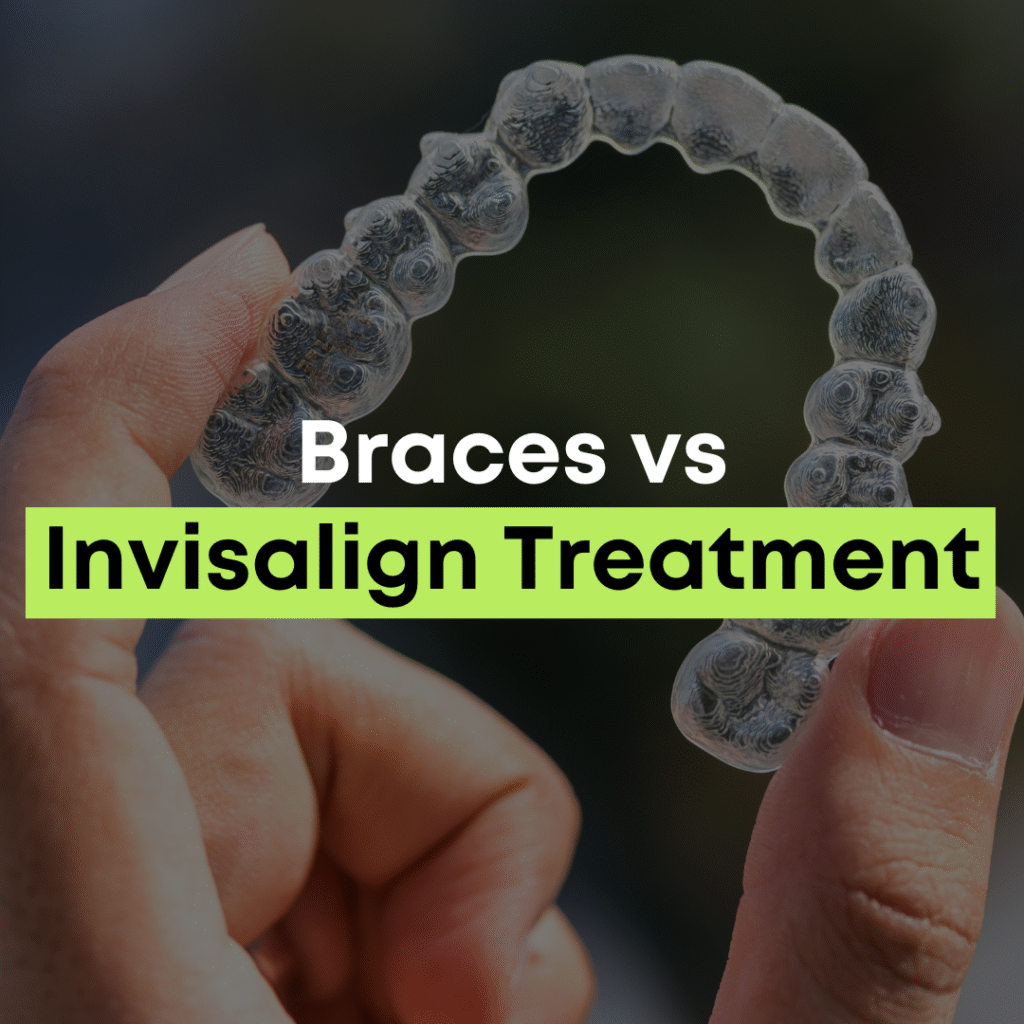
Invisalign Treatment vs Braces Many people are wondering which is better for them: Invisalign Treatment vs braces? A straighter smile is within reach without the hassle of metal brackets and wires. Many people seeking orthodontic treatment turn to Invisalign aligners as a modern solution for correcting misaligned teeth. But what exactly is Invisalign treatment, and how does it compare to traditional braces? What Is Invisalign Treatment vs Braces? Invisalign treatment is an orthodontic method that uses a series of clear, removable aligners to gradually shift teeth into proper alignment. Unlike traditional braces, which rely on metal brackets and wires, this system provides a nearly invisible way to straighten teeth without significant lifestyle disruptions. How Does Invisalign Treatment vs Braces Work? The process begins with a consultation, where a dentist or orthodontist assesses the patient’s teeth and creates a customized treatment plan. Using advanced 3D imaging technology, a series of clear aligners is designed to move teeth into their desired positions. Each set of aligners is worn for about 20-22 hours per day and changed every one to two weeks. Over time, the subtle adjustments apply controlled pressure, guiding the teeth into better alignment. Unlike metal braces, which require regular tightening, the progression happens through the sequential use of new aligners. Invisalign Treatment vs. Braces: Key Differences When considering orthodontic treatment, patients often wonder how Invisalign treatment compares to traditional braces. Here’s a breakdown of the key differences: 1. Aesthetic Appeal Invisalign aligners are clear and nearly invisible, making them a more discreet option compared to metal braces. For individuals concerned about the appearance of braces, the transparent design offers a subtle alternative. 2. Comfort & Convenience Metal braces can cause discomfort due to brackets and wires, which may irritate the gums and cheeks. Invisalign aligners, made of smooth plastic, are generally more comfortable and eliminate the need for adjustments with metal components. 3. Eating & Oral Hygiene Traditional braces come with dietary restrictions since certain foods can damage the brackets or get stuck in wires. With Invisalign treatment, aligners are removable, allowing patients to eat freely and maintain normal brushing and flossing habits. 4. Treatment Duration The length of treatment depends on the complexity of the case. Invisalign treatment typically takes 12-18 months, while traditional braces may be needed for a longer period, depending on the severity of misalignment. 5. Suitability for Complex Cases Traditional braces are often more effective for severe misalignments, complex bite issues, or cases requiring extensive movement. Invisalign treatment works best for mild to moderate corrections but continues to evolve to address a wider range of orthodontic needs. Is Invisalign Treatment Right for You? Choosing between Invisalign treatment and traditional braces depends on individual needs, lifestyle, and orthodontic goals. While clear aligners offer a discreet and convenient way to straighten teeth, some cases may still require conventional braces for optimal results. Consulting a dentist or orthodontist is the best way to determine the right approach for a healthier, more confident smile. For a free consultation, give Modern Dental of Durham a call at 919-544-3723!
Am I a Good Candidate for Invisalign?
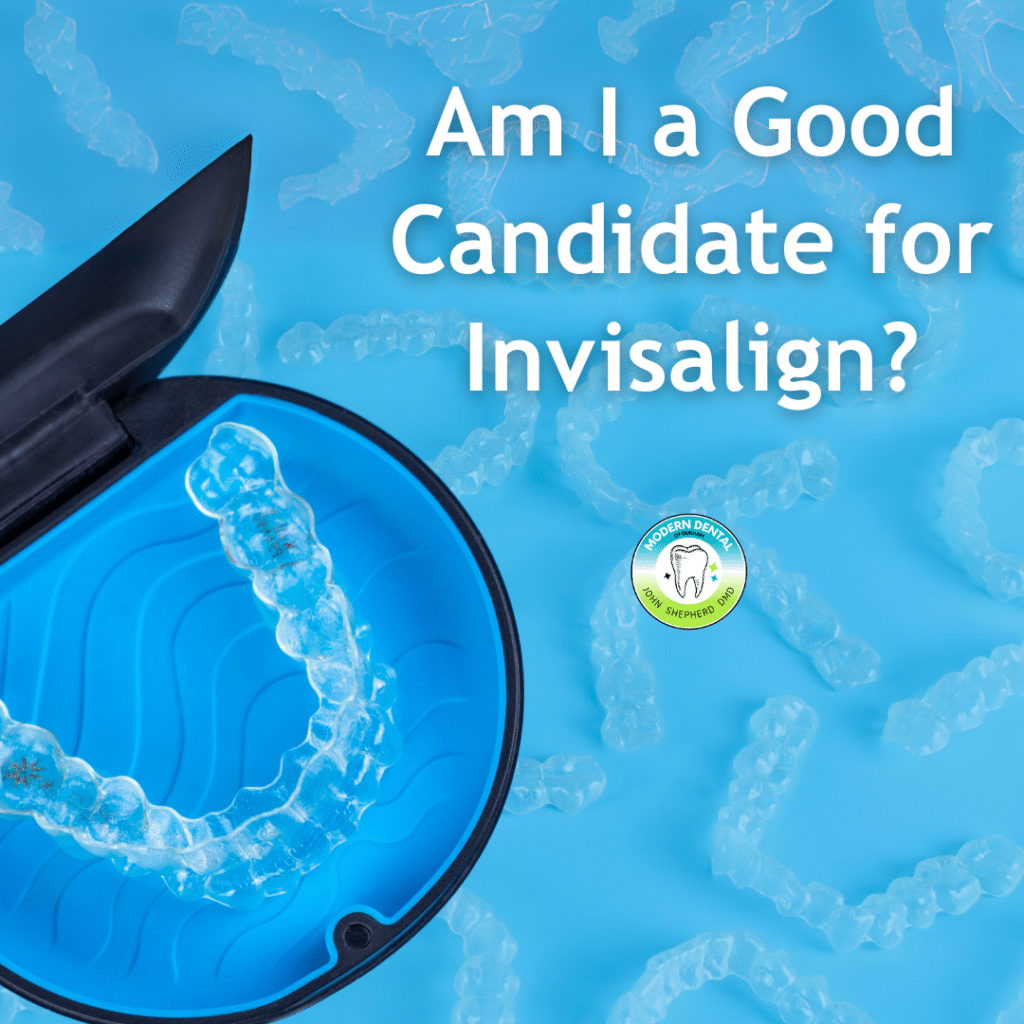
Am I a Good Candidate for Invisalign? Invisalign offers a modern and discreet way to straighten teeth, but it’s not one-size-fits-all. Wondering if it’s right for you? Let’s explore the key factors that determine whether you’re an ideal candidate for this clear aligner treatment. Eligibility Checklist: Who’s a Good Fit? 1. You Have Mild to Moderate Dental Issues Invisalign effectively treats common concerns like crowding, spacing, and minor bite irregularities such as mild overbites or crossbites. However, more complex malocclusions, like severe jaw misalignment or large gaps, may still require traditional braces or surgical options. 2. You Maintain Good Oral Health Your teeth and gums should be healthy before beginning treatment. That means no active gum disease, cavities, or other untreated dental concerns. These conditions must be addressed first to ensure successful Invisalign results. 3. You Can Commit to Wearing Them Consistently Success with Invisalign hinges on wearing your aligners 20–22 hours a day. If this level of consistency isn’t realistic for your lifestyle, the treatment may take longer or not deliver the desired results. 4. Age and Dental Maturity Matter Invisalign works best for teens (who have their full set of permanent teeth) and adults. Children whose jaws are still growing or those missing key adult teeth aren’t ideal candidates. 5. Good Personal Habits Are Essential Smoking, poor hygiene, or forgetting to clean and wear your trays can compromise the treatment. Invisalign requires both commitment and care for consistent progress. Quick Candidate Summary Candidate Criteria Good Fit for Invisalign? Mild to moderate alignment issues Yes Healthy teeth and gums Yes Wears aligners 20–22 hrs/day Yes Fully developed adult dentition Yes (teens & adults) Strong personal commitment Yes Final Thoughts If you match most, or all, of the criteria above, there’s a good chance Invisalign could be an excellent option for achieving a straighter, confident smile. The best way to know for sure? Schedule a consultation with our experienced team to assess your unique needs.