Missing Teeth? Explore Dental Implant Alternatives in Durham
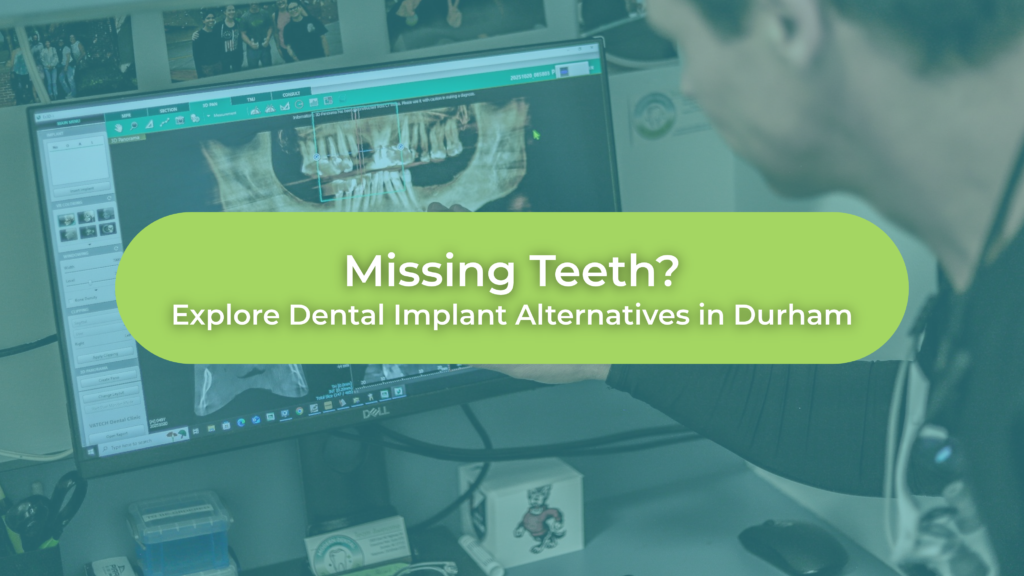
Missing teeth can make everyday moments uncomfortable, from chewing your favorite foods to smiling in photos. You may want to close the gap but feel unsure about dental implants, especially when considering surgery, treatment time, or your budget. Dental implants are one option for replacing missing teeth. Depending on your oral health and the number of teeth missing, a dental bridge, removable partial denture, or full denture may also be worth discussing. Exploring dental implant alternatives in Durham starts with understanding how each option works and what would suit your smile. Dental Bridges: A Fixed Option for Missing Teeth A dental bridge fills a gap with artificial teeth supported by nearby teeth. A conventional tooth-supported bridge stays in place, so you do not remove it for daily cleaning. The American Dental Association’s MouthHealthy explains that bridges replace missing teeth and use surrounding teeth for support. A fixed bridge can only be removed by a dentist. A tooth-supported bridge may be an option when you want a fixed replacement without an implant. Your dentist will need to assess the teeth around the gap to determine whether they can provide suitable support. Questions to ask include: Are the teeth beside the gap healthy enough to support a bridge? How would those teeth need to be prepared? How should I clean around and underneath the replacement tooth? Removable Partial Dentures: Replacing Some Missing Teeth A removable partial denture replaces missing teeth while allowing you to keep your remaining natural teeth. It can be taken out for cleaning, and some designs attach to existing teeth. The National Health Service (NHS) explains that partial dentures can replace one or more missing teeth, while complete dentures replace all the teeth in the upper or lower jaw. Dentures can help with eating and speaking difficulties caused by tooth loss. A partial denture is an option to discuss when you have several gaps or prefer a removable replacement. Ask your dentist how it would fit, how to care for it, and what to expect as you adjust. Full Dentures: Replacing an Entire Row of Teeth When all the teeth in an upper or lower arch are missing, conventional full dentures may be considered. These removable appliances fit over the gums and replace an entire row of teeth without dental implants. Getting used to dentures takes time. The NHS notes that eating and speaking may initially feel different and that dentures need regular cleaning and ongoing dental checks. During your consultation, discuss comfort, stability, maintenance, and any adjustments that may be needed. Understanding these practical details can help you decide whether removable dentures fit your daily routine. How to Choose Between Dental Implant Alternatives The right replacement depends on more than how a treatment looks. Your dentist will consider the location of the gaps, the condition of your remaining teeth and gums, and your overall oral health. Bring these priorities to your appointment: Fixed or removable: Would you prefer a replacement that stays in place or one you remove for cleaning? Daily care: What cleaning routine can you comfortably maintain? Budget: What is the estimated total cost, and what does your insurance cover? Treatment process: How many appointments are needed, and will you need a temporary replacement? Long-term maintenance: What adjustments, repairs, or replacements might be needed over time? A dental exam helps turn these questions into a treatment plan that reflects your needs. Explore Your Tooth Replacement Options in Durham You do not need to have a treatment picked out before making an appointment. Start with your concerns, whether that is difficulty chewing, an uncomfortable gap, or uncertainty about dental implants. At Modern Dental of Durham, discuss your missing teeth and ask which replacement options may be appropriate for your oral health, preferences, and budget. Take the next step toward a more comfortable smile. Request an appointment at Modern Dental of Durham to explore your tooth replacement options.
How to Fix Missing Teeth | Durham Dentist?
A missing tooth can make everyday decisions harder. You may avoid certain foods, chew on one side, or feel hesitant to smile in photos. When you start searching for how to fix missing teeth, the choices can feel overwhelming. According to the American Dental Association’s MouthHealthy resource, bridges, dentures, and implants are options for replacing missing teeth. Your dentist can help determine which approach fits your needs. [https://www.mouthhealthy.org/all-topics-a-z/missing-teeth] Understanding how each option works can help you prepare for that conversation. Why Should You Replace Missing Teeth? Even a missing tooth near the back of your mouth can affect chewing. The American Dental Association explains that remaining teeth may shift after tooth loss and that bone loss can occur around a missing tooth. A gap may also affect how you eat or speak. [https://www.mouthhealthy.org/all-topics-a-z/missing-teeth] A dental examination is the first step toward understanding what the gap means for your mouth and which replacement option is appropriate. Dental Implants: Support for Replacement Teeth According to the American Dental Association, dental implants are posts surgically placed in the jawbone to provide support for replacement teeth. For a single missing tooth, a custom crown attaches to the implant. Implants can also support bridges or dentures when multiple teeth are missing. A single-tooth implant does not rely on neighboring teeth for support. This may make it an option worth discussing when the teeth beside the gap are healthy. Implant treatment involves surgery and healing while the implant integrates with the bone. The ADA explains that this process can take several months for some patients. Your dentist will assess your health and treatment needs before recommending a plan. An implant may be worth discussing when: you want a fixed replacement and are willing to undergo surgery and allow time for healing. Dental Bridges: A Fixed Replacement Across a Gap Cleveland Clinic explains that a dental bridge replaces one tooth or a row of missing teeth. A traditional bridge uses crowns on the natural teeth beside the gap to support the artificial teeth between them. Because a traditional bridge is supported by existing teeth, it does not require implant placement surgery. However, those supporting teeth generally need to be reshaped for crowns. Their condition matters when deciding whether a bridge is suitable. A bridge requires careful daily cleaning around the supporting teeth and beneath the replacement teeth. Your dentist can show you how to reach these areas and maintain the restoration. A bridge may be worth discussing when: you want a fixed replacement and the teeth beside the gap can provide appropriate support, particularly when they already need crowns. Dentures: Replacing Several or All Missing Teeth Removable dentures are another way to replace missing teeth. Partial dentures replace some teeth while natural teeth remain. Complete dentures replace all teeth in the upper or lower arch. The American Dental Association explains that dentures can help people eat and speak more comfortably after tooth loss. New dentures may initially feel awkward, and follow-up appointments help your dentist check and adjust the fit. Dentures require daily cleaning, along with care for your gums and any remaining natural teeth. For some patients, implants can provide additional support for a denture, an option the ADA also describes. Dentures may be worth discussing when: you are missing several or all teeth and want to explore options for restoring a larger area of your smile. How Do You Choose the Right Tooth Replacement? Start with a dental evaluation rather than choosing a treatment based on appearance alone. Your dentist will consider the number and location of missing teeth, the health of the teeth around them, and the condition of your gums and jawbone. Your preferences matter, too. Discuss whether you want a fixed or removable replacement, how you feel about surgery, and what treatment timeline fits your needs. Bring these questions to your consultation: Which replacement options are suitable for my mouth? Will I need any dental treatment before replacing the missing teeth? How long will the treatment and healing process take? What daily cleaning and follow-up care will I need? The answers can help you choose a treatment with a clearer understanding of what it involves. Explore Tooth Replacement in Durham You do not need to know which treatment you want before making an appointment. A consultation gives you the opportunity to understand your options and ask questions about your next step. Ready to fix missing teeth? Schedule a consultation with Modern Dental of Durham. Interested in implants? Ask about our free initial dental implant consultation. Visit https://moderndentalofdurham.com/dental-appointment/ to request an appointment.
Invisalign for Crowded Teeth, Overbites, and Gaps
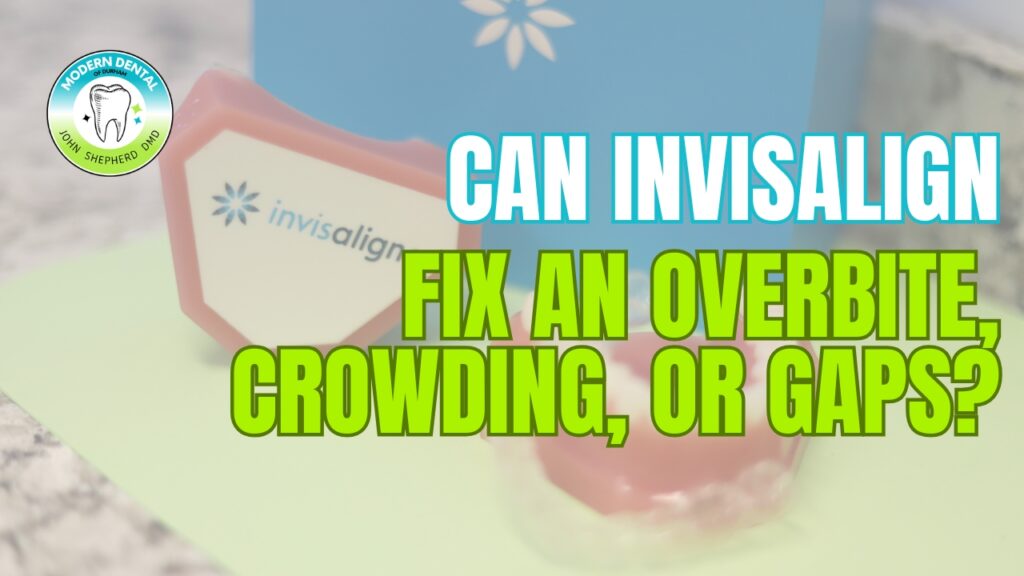
Can Invisalign Fix an Overbite, Crowding, or Gaps? Yes, Invisalign can fix many cases of overbite, crowded teeth, and gaps. The clear aligners gradually apply controlled pressure to move teeth into healthier positions. However, Invisalign is not appropriate for every orthodontic concern. The severity of the misalignment, the position of your teeth, and the structure of your jaw can all affect whether clear aligners are the right choice. At Modern Dental of Durham, we evaluate your teeth, bite, and overall oral health before creating a personalized Invisalign treatment plan. How Does Invisalign Move Your Teeth? Invisalign uses a customized series of clear, removable aligners. Each set is designed to make small, gradual changes to the position of your teeth. As you progress through the aligners, your teeth move closer to their planned positions. Some patients may also need small, tooth-colored attachments placed on certain teeth. These attachments help the aligners apply pressure more precisely during specific movements. The American Association of Orthodontists identifies gapped teeth, crowded teeth, and overbites among the common conditions clear aligners may treat. For successful treatment, the aligners must be worn consistently according to your provider’s instructions. Removing them too frequently can slow progress and affect the final result. Can Invisalign Fix an Overbite? Invisalign can improve many mild to moderate overbites. An overbite, also called a deep bite, occurs when the upper front teeth excessively overlap the lower front teeth. A small amount of vertical overlap is normal. Treatment may be recommended when the overlap is excessive or contributes to concerns such as: Uneven tooth wear Gum irritation Difficulty biting or chewing Jaw discomfort Lower teeth touching the roof of the mouth Concerns about the appearance of the smile Clear aligners can gradually reposition the teeth to reduce excessive overlap. Depending on the case, attachments or other features may be added to help guide the necessary movement. However, an overbite caused primarily by the size or position of the jaw may require a different or more comprehensive approach. Severe cases may not be fully corrected with Invisalign alone. It is also important to distinguish an overbite from an overjet. An overbite describes vertical overlap, while an overjet occurs when the upper front teeth project too far forward horizontally. A dental evaluation can identify the type of bite problem you have and determine the appropriate treatment. Can Invisalign Fix Crowded Teeth? Invisalign can treat many cases of mild to moderate dental crowding. Crowding occurs when there is not enough space in the jaw for the teeth to fit in proper alignment. Crowded teeth may: Overlap or twist Erupt at an angle Sit too far forward or backward Make brushing and flossing more difficult Create areas where plaque can accumulate Invisalign aligners can gradually move crowded teeth into more balanced positions. In some cases, your provider may need to create a small amount of additional space before or during treatment. The best treatment approach depends on how much space is needed and whether the crowding affects only the teeth or involves the jaw. Severe crowding may require additional procedures or a different type of orthodontic treatment. Correcting crowded teeth can improve the appearance of your smile while making it easier to clean between the teeth and along the gumline. Can Invisalign Close Gaps Between Teeth? Yes, Invisalign can close many small to moderate gaps between teeth. These spaces may develop because of: Differences between tooth and jaw size Missing or undersized teeth Certain oral habits Gum or periodontal problems Teeth shifting after previous orthodontic treatment An oversized frenum between the front teeth The aligners apply gentle pressure to move the teeth closer together over time. According to the American Association of Orthodontists, clear aligners can be an option for mild to moderate spacing. However, the cause of the gap matters. When spacing results from missing teeth, unusually shaped teeth, or gum disease, Invisalign may need to be combined with restorative or periodontal care. After the gap has been closed, wearing a retainer as directed is important because spaces can reopen when the teeth are not properly maintained. Can Invisalign Treat More Than One Problem at Once? Yes. Many patients have a combination of orthodontic concerns, such as crowding with an overbite or gaps with an uneven bite. A customized Invisalign plan can be designed to address several tooth movements throughout the same course of treatment. Your provider will plan the order and direction of those movements based on your bite and desired outcome. However, every case is different. Treating several concerns together may require: Tooth-colored attachments Additional sets of aligners Refinement aligners More frequent progress checks Consistent wear throughout treatment A digital scan and bite evaluation are necessary to determine what Invisalign may be able to correct in your specific case. What Can Affect Your Invisalign Results? Several factors influence how well Invisalign treatment works. Severity of the misalignment Mild and moderate concerns are often easier to address with clear aligners. More complex tooth or jaw movements may require another treatment approach. Consistent aligner wear Invisalign aligners are removable, but they must be worn for the recommended amount of time each day. Consistency helps keep the teeth moving according to plan. Oral health Cavities, gum disease, and other active dental concerns should be treated before Invisalign begins. Healthy teeth and gums provide a stronger foundation for orthodontic movement. Age and dental development Invisalign can be used by both teens and adults, but the patient’s teeth and jaw development must be considered during treatment planning. Following aftercare instructions Teeth can shift after orthodontic treatment. Wearing your retainer as directed helps maintain the new alignment and protect your results. What Are the Benefits of Invisalign? For qualified patients, Invisalign offers several benefits: Clear, discreet appearance Removable aligners No metal brackets or wires Easier brushing and flossing Fewer food restrictions Customized treatment planning Treatment for several common alignment concerns Because the aligners are removable, you can take them out for eating, drinking, brushing, and flossing. However, they should be
Dental Implants for Multiple Missing Teeth | Durham
Can Dental Implants Replace Multiple Missing Teeth? Yes, dental implants can replace multiple missing teeth. Depending on the number and location of the missing teeth, your dentist may recommend individual implants, an implant-supported bridge, or a full-arch restoration. You may not need one implant for every missing tooth. In many cases, strategically placed implants can support several replacement teeth. This can restore your ability to chew, improve the appearance of your smile, and provide greater stability than a removable appliance. At Modern Dental of Durham, we use advanced imaging and personalized treatment planning to determine which tooth-replacement option best fits your oral health, needs, and smile goals. How Do Dental Implants Replace Missing Teeth? A dental implant is a small post placed in the jawbone to support a replacement tooth or dental restoration. Once the implant has healed and integrated with the surrounding bone, it can act as a stable foundation for a crown, bridge, or full arch of teeth. According to the American Dental Association, custom-made bridges or dentures may be attached to dental implants when more than one tooth needs to be replaced. The right restoration depends on: How many teeth are missing Whether the missing teeth are next to each other The health of your gums The amount and quality of available jawbone The condition of your remaining teeth Your overall health and treatment goals A dental implant consultation allows your dentist to examine these factors and create a treatment plan specifically for you. Option 1: Individual Dental Implants When several teeth are missing in different areas of the mouth, individual dental implants may be recommended. Each missing tooth is replaced with its own implant and customized crown. Because the implants stand independently, the surrounding natural teeth usually do not need to be reshaped to support the restoration. Each crown can also be designed to match the size, shape, and color of your natural teeth. However, individual implants are not always necessary when multiple missing teeth are located next to one another. Option 2: An Implant-Supported Bridge An implant-supported bridge can replace several adjacent missing teeth without placing an implant beneath every replacement tooth. For example, two implants may be positioned to support a bridge containing multiple artificial teeth. The implants act as anchors at each end, while the connected replacement teeth fill the space between them. Unlike a traditional dental bridge, an implant-supported bridge does not rely on neighboring natural teeth for support. The American Academy of Periodontology identifies multiple-tooth dental implants as an option for replacing several missing teeth. An implant-supported bridge may offer: A secure, stable fit Improved chewing function A natural-looking smile Support without modifying healthy neighboring teeth Greater comfort than some removable partial dentures Your dentist will determine how many implants are needed based on the size of the gap, the location of the missing teeth, your bite, and the condition of your jawbone. Option 3: Full-Arch Dental Implants When most or all teeth in the upper or lower jaw are missing or cannot be restored, a full-arch dental implant solution may be considered. With treatments such as All-on-4 dental implants, a complete arch of replacement teeth is supported by four or more strategically placed implants. This means an entire row of teeth may be restored without placing an implant for every tooth. Full-arch restorations are designed to remain securely supported by the implants. They may offer more stability for eating and speaking than traditional removable dentures. However, All-on-4 is not the right solution for every patient. A complete examination and detailed imaging are needed to evaluate your bone structure, gums, bite, and remaining teeth. What Are the Benefits of Replacing Multiple Teeth With Implants? Dental implants are designed to function as stable anchors for replacement teeth. For qualified patients, they can provide several practical and cosmetic benefits. Improved stability Implant-supported restorations are anchored in the jaw rather than resting only on the gums. This can provide better stability while speaking and chewing. Natural-looking results Crowns and bridges attached to implants can be customized to complement your remaining teeth and facial features. Support for healthy neighboring teeth An implant-supported bridge generally does not require healthy adjacent teeth to serve as anchors, unlike some traditional bridges. A fixed tooth-replacement option Depending on the restoration selected, implants can support replacement teeth that remain securely in place instead of being removed each day. Help maintaining the jawbone Because implants are placed within the jaw, they stimulate the surrounding bone during normal use. This may help reduce the bone loss that commonly occurs after teeth are lost. Do You Need One Implant for Every Missing Tooth? Not necessarily. One implant is commonly used to replace one missing tooth, but multiple adjacent teeth may be replaced with an implant-supported bridge. A full arch may also be supported by a limited number of strategically placed implants. There is no single implant number that works for everyone. Your dentist must consider the location of the missing teeth, the forces created by your bite, available bone, and the type of final restoration. The goal is to create a treatment plan that provides appropriate support, function, and long-term stability for your smile. Are You a Candidate for Multiple-Tooth Dental Implants? You may be a candidate when you: Have one or more missing teeth Have healthy gums or are willing to treat existing gum disease Have enough jawbone to support implants or qualify for bone grafting Are in suitable overall health for implant treatment Do not smoke or are prepared to follow your dentist’s recommendations Can maintain consistent brushing, flossing, and professional dental care Having experienced bone loss does not automatically rule out dental implants. Additional procedures, such as bone grafting, may help some patients become candidates. Only an in-person examination can determine whether implants are appropriate for you. What Happens During the Dental Implant Process? The process begins with a consultation and examination. Your dentist will evaluate your teeth and gums, review your health history, and use dental imaging to
Can You Save a Loose Adult Tooth?
A loose tooth is normal when you’re a child, but when an adult tooth starts moving, it can be a sign that something is wrong. Can you save a loose adult tooth? In many cases, yes—especially when the cause is identified and treated early. The right treatment depends on why the tooth became loose, how much support it has lost, and the health of the surrounding gums and bone. That’s why a loose permanent tooth should be evaluated by a dentist rather than left to see if it improves on its own. Why Would an Adult Tooth Become Loose? Permanent teeth are designed to stay firmly anchored in the jaw. When one begins to move, there is usually an underlying reason. 1. Gum Disease Gum disease is one of the most common causes of loose teeth in adults. According to the American Dental Association, advanced gum disease can damage the tissues and bone that support your teeth. When enough supporting bone is lost, a tooth may begin to feel loose. Other signs of gum disease can include: Bleeding or swollen gums Receding gums Persistent bad breath Tender gums Changes in the way your teeth fit together Treating gum disease early may help protect the structures supporting the affected tooth. 2. Injury or Trauma A fall, sports injury, accident, or impact to the mouth can loosen a tooth even when it doesn’t appear cracked or broken. Sometimes the tissues around the tooth simply need time and stabilization to heal. In other cases, the tooth, root, or surrounding bone may have been damaged. A dentist may recommend dental X-rays to determine the extent of the injury. 3. Teeth Grinding or Clenching Repeated grinding and clenching can place excessive pressure on your teeth and their supporting structures. Over time, this additional force may contribute to tooth mobility, particularly when gum or bone support has already been compromised. If grinding is part of the problem, your dentist may recommend a custom nightguard to reduce pressure on your teeth while you sleep. Can a Loose Adult Tooth Tighten Back Up? Sometimes. If the tooth is only slightly loose and the surrounding structures are still healthy enough, treating the underlying cause may allow the tissues around the tooth to heal and become more stable. However, a loose permanent tooth generally should not be expected to tighten on its own without determining why it became loose. The sooner the cause is diagnosed, the more treatment options may be available. How Can a Dentist Save a Loose Adult Tooth? Treatment will depend on the cause and severity of the problem. Deep Cleaning for Gum Disease If periodontal disease is affecting the tissues supporting the tooth, treatment may include scaling and root planing to remove plaque and tartar below the gumline. More advanced periodontal problems may require additional treatment. Splinting the Tooth In certain cases, a dentist may temporarily attach the loose tooth to nearby stable teeth. This technique, known as splinting, can reduce movement and give the supporting tissues an opportunity to heal. Treating Teeth Grinding When excessive grinding or clenching contributes to the problem, protecting the teeth from additional pressure may be part of the treatment plan. A custom nightguard may help reduce damaging forces. Restorative or Root Canal Treatment Trauma can sometimes damage the inside of a tooth or its surrounding structures. Depending on the injury, additional restorative treatment or root canal therapy may be necessary. When Can a Loose Tooth Not Be Saved? Unfortunately, not every loose adult tooth can be saved. If there has been severe bone loss, extensive infection, a significant fracture, or other irreversible damage, removing the tooth may be the healthiest option. If extraction becomes necessary, your dentist can discuss replacement options such as a dental implant or bridge. The important thing is not to assume that a loose tooth automatically needs to be removed. A dental examination is needed to determine whether it can be preserved. What Should You Do If Your Adult Tooth Is Loose? Until you can see your dentist: Avoid wiggling or repeatedly checking the tooth. Chew on the opposite side of your mouth. Avoid hard, crunchy, or sticky foods around the affected tooth. Continue brushing gently to keep the area clean. Schedule a dental evaluation as soon as possible. If the looseness happened after an injury, or you have significant pain, swelling, bleeding, or signs of infection, seek dental care promptly. Don’t Wait to Have a Loose Tooth Checked So, can you save a loose adult tooth? Depending on what caused it and how much damage has occurred, a dentist may be able to stabilize the tooth and treat the underlying problem. Waiting can allow gum disease, infection, or structural damage to progress. If you’ve noticed that one of your permanent teeth feels loose, schedule an appointment with Modern Dental of Durham. Our dental team can evaluate the tooth, identify what is causing the movement, and discuss the treatment options available to protect your oral health. Schedule your dental appointment with Modern Dental of Durham today.
Can a Cracked Tooth Heal on Its Own? Durham Dentist
A cracked tooth can happen when you least expect it. You might bite down on something hard, notice pain while chewing, or suddenly develop sensitivity to hot and cold foods. Can a cracked tooth heal on its own? Unfortunately, a true crack in a tooth cannot naturally repair itself. While the discomfort may come and go, the damage can remain and potentially worsen over time. Getting the tooth evaluated early can help protect it, prevent further damage, and determine the right treatment. Why Can’t a Cracked Tooth Heal Itself? Your teeth are incredibly strong, but they don’t heal the same way your bones or skin do. Enamel, the hard outer layer of your tooth, does not contain living cells capable of rebuilding a true crack. Once the tooth structure has fractured, it cannot simply grow back together. Sometimes the pain may disappear temporarily, but that doesn’t necessarily mean the crack has healed. The tooth may still be vulnerable to further damage or infection. What Causes a Tooth to Crack? Teeth can crack for several reasons, including: Biting down on hard foods, ice, or objects Grinding or clenching your teeth Large or older dental fillings that weaken the remaining tooth structure Trauma or an injury to the mouth Sudden changes in temperature Normal wear and tear over time In some cases, you may not even know exactly when the crack happened. What Does a Cracked Tooth Feel Like? Not every cracked tooth causes constant pain. In fact, symptoms can be surprisingly inconsistent. You may notice: Pain when biting down or releasing your bite Sensitivity to hot or cold temperatures Discomfort when eating sweet foods Pain that seems to come and go Tenderness or discomfort around the affected tooth Because these symptoms can also occur with cavities, damaged fillings, and other dental problems, a dental examination is important for determining what’s actually causing the discomfort. Are All Tooth Cracks Serious? No. The severity depends on the type, depth, and location of the crack. According to the American Association of Endodontists, cracked teeth can take several different forms, ranging from superficial craze lines to more significant cracks and split teeth. Learn more from the American Association of Endodontists Craze Lines These are tiny cracks that affect only the enamel. They’re common in adults and usually don’t cause pain. In many cases, treatment isn’t necessary unless there is a cosmetic concern. Fractured Cusp Part of the chewing surface of the tooth may break or weaken, often around a filling. Depending on the damage, your dentist may recommend a filling or dental crown to restore and protect the tooth. Cracked Tooth A crack can extend from the chewing surface toward the root. Early treatment is important because the crack may continue to spread and affect more of the tooth. Split Tooth If a crack progresses far enough, the tooth can separate into distinct sections. At this stage, saving the entire tooth may no longer be possible. What Happens If You Ignore a Cracked Tooth? A small crack can become a much larger dental problem. Continued chewing pressure may cause the crack to spread deeper into the tooth. If bacteria reach the inner pulp, the tooth can become inflamed or infected. At that point, treatment may become more extensive and could include root canal therapy, a dental crown, or, in severe cases, extraction. This is why waiting for a cracked tooth to “heal” can potentially make the situation worse. Even if the pain temporarily disappears, the underlying damage may still be present. How Does a Dentist Treat a Cracked Tooth? Treatment depends on the location and severity of the crack and how much of the tooth has been affected. Minor damage may only need monitoring or dental bonding. A larger crack may require a dental crown to strengthen and protect the remaining tooth structure. If the crack has reached the pulp inside the tooth, root canal treatment may be necessary before the tooth is restored. If the tooth is severely split or the crack extends into an area that cannot be predictably restored, extraction may sometimes be recommended. The goal is to preserve as much of your natural tooth as possible whenever it can be successfully restored. What Should You Do If You Think You Cracked a Tooth? If you suspect that you’ve cracked a tooth, avoid chewing hard or crunchy foods on the affected side until you can see your dentist. Don’t repeatedly test the tooth by biting down to see whether it still hurts. Additional pressure could potentially worsen the damage. Most importantly, don’t wait for the tooth to repair itself. The earlier a crack is diagnosed, the more treatment options may be available to protect the tooth and prevent further complications. Get Your Cracked Tooth Checked at Modern Dental of Durham A cracked tooth won’t naturally grow back together, but timely dental care may help prevent the crack from becoming a much bigger problem. If you’re experiencing pain when chewing, temperature sensitivity, or think you may have damaged a tooth, Modern Dental of Durham can evaluate the problem and recommend the appropriate treatment based on your needs. Don’t wait for a small crack to become a bigger dental problem. Schedule an appointment with Modern Dental of Durham today.
Broken Tooth but No Pain? What to Do in Durham, NC
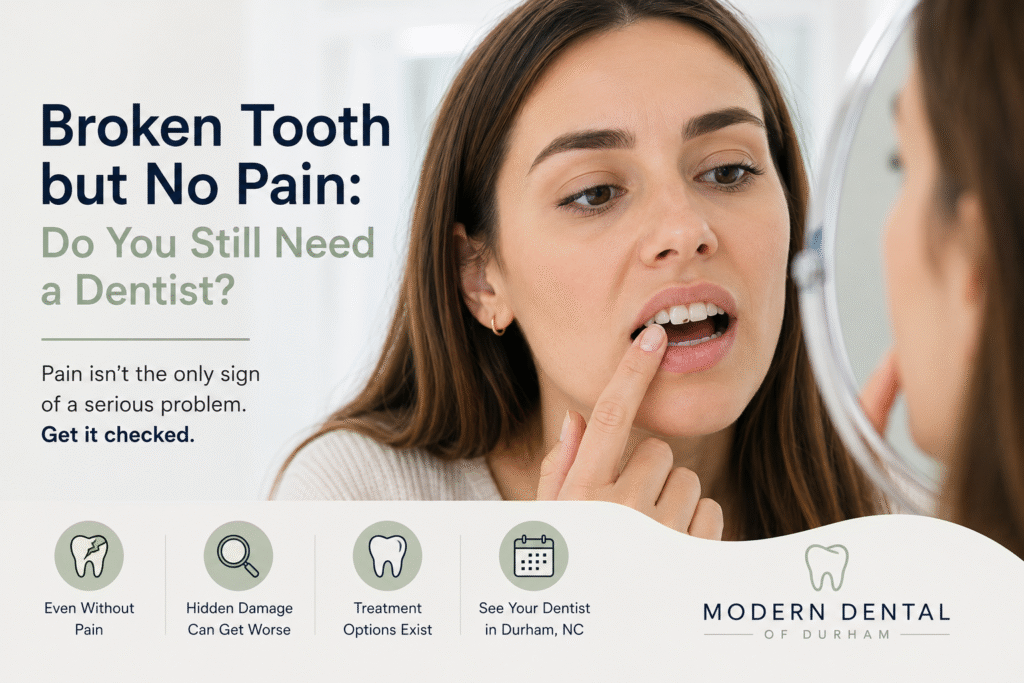
A broken tooth but no pain can be easy to ignore. You may notice a small piece missing, feel a rough edge with your tongue, or see a crack without experiencing sensitivity or discomfort. If it does not hurt, do you really need to see a dentist? In many cases, yes. Pain is only one sign that something is wrong with a tooth. A break can weaken the tooth, expose deeper layers, or create an area where bacteria can enter—even when you feel completely fine. Having the tooth evaluated early can help determine how serious the damage is and whether treatment is needed to prevent further problems. Why Can a Broken Tooth Have No Pain? A tooth can break without causing immediate pain for several reasons. A minor fracture may affect only the enamel, the hard outer layer of the tooth. Because enamel does not contain nerves, small chips and surface damage may not hurt. In other cases, a crack or break may not have reached the inner pulp where the tooth’s nerves and blood vessels are located. You might also have an existing filling or dental restoration that breaks while the tooth itself remains relatively comfortable. The absence of pain does not necessarily reveal how much damage has occurred. A dental examination can help determine what part of the tooth is affected. Broken Tooth but No Pain: Can You Wait to See a Dentist? Even with a broken tooth but no pain, delaying an evaluation may allow the damage to progress. A weakened tooth can break further when you chew. Cracks can also provide pathways for bacteria to reach areas that are harder to keep clean. If the inner portion of the tooth eventually becomes affected, symptoms such as sensitivity, discomfort when biting, swelling, or infection may develop. According to the American Dental Association’s MouthHealthy guidance on cracked teeth, cracked teeth can present in different ways, and treatment depends on the location and severity of the damage. Getting the tooth checked before symptoms worsen can give your dentist more information about whether the tooth needs treatment and what options are appropriate. What Can Cause a Tooth to Break? Teeth are strong, but several factors can make them more vulnerable to cracking or breaking. Biting hard foods or objects can cause sudden damage. Grinding or clenching can repeatedly place pressure on the teeth, while large fillings may leave less natural tooth structure available to withstand chewing forces. Decay can also weaken a tooth from within. In these situations, what appears to be a sudden break may be the result of damage that developed gradually. Normal wear, previous dental work, and trauma to the mouth can also contribute. What Should You Do After Breaking a Tooth? Contact your dentist to have the tooth evaluated, even if it is not currently painful. Until your appointment, avoid chewing hard or sticky foods on the affected side and continue gently brushing and flossing the area. If the broken edge feels sharp, be careful around your tongue and cheeks. If you find a piece of the tooth, keep it and bring it to your appointment. A broken tooth accompanied by significant bleeding, swelling, severe pain, facial trauma, or other concerning symptoms may require more urgent attention. How Does a Dentist Treat a Broken Tooth? Treatment depends on where the tooth broke, how much structure was lost, and whether the inner portion of the tooth has been affected. For a small cosmetic chip, dental bonding may be enough to restore the tooth’s shape. A veneer may be considered for certain cosmetic damage affecting a front tooth. When more tooth structure is compromised, a dental crown may be recommended to restore and protect the remaining tooth. Damage involving the pulp may require additional treatment before the tooth can be restored. This is why two teeth that look similarly broken may require very different treatment plans. Can a Broken Tooth Get Worse Over Time? Yes. Once part of the tooth has been compromised, normal chewing forces can place additional stress on the remaining structure. A small fracture may stay relatively stable, or it may extend and lead to a larger break. Food and bacteria can also collect around damaged areas, potentially increasing the risk of decay or infection. Waiting for pain to appear is therefore not the best way to determine whether a broken tooth needs attention. When Is a Broken Tooth a Dental Emergency? Not every broken tooth requires emergency treatment, but certain symptoms should be taken more seriously. Seek prompt dental care if the break is accompanied by severe or worsening pain, swelling, uncontrolled bleeding, signs of infection, or significant trauma to the mouth or face. A tooth that has been knocked loose or displaced also requires timely evaluation. Even without those symptoms, schedule an appointment so your dentist can assess the damage and recommend an appropriate next step. Broken Tooth but No Pain? Get It Checked in Durham, NC A broken tooth but no pain may seem harmless, but comfort does not always mean the tooth is healthy or structurally sound. Identifying the extent of the damage early may help prevent a small problem from becoming more complicated. At Modern Dental of Durham, our team can examine the affected tooth, determine the extent of the damage, and discuss treatment options based on your oral health and individual needs. Have a broken or damaged tooth? Request an appointment with Modern Dental of Durham to have it evaluated. Request an Appointment at Modern Dental of Durham
Can Veneers Fix Gaps, Chips, and Uneven Teeth?
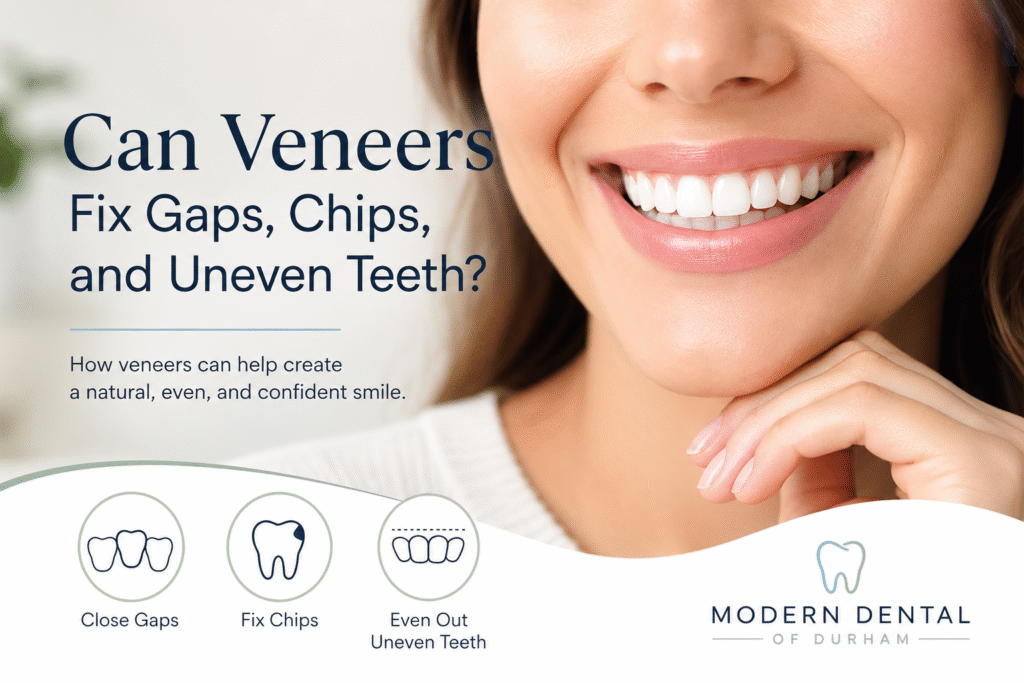
Can Veneers Fix Gaps, Chips, and Uneven Teeth? A small gap between your teeth, a chipped edge, or teeth that look uneven can affect the overall appearance of your smile. When you have more than one cosmetic concern, you may also wonder whether you need a different treatment for each problem. For some patients, veneers offer a way to improve several concerns at once. Veneers for gaps and chipped teeth can change the visible shape, size, color, and proportions of teeth to create a more balanced, natural-looking smile. So, what can veneers actually correct, and when might another dental treatment be a better choice? What Are Dental Veneers? According to the American Dental Association (ADA), Dental veneers are thin, custom-made coverings bonded to the front surfaces of teeth. Depending on the material and treatment plan, veneers can be used to improve teeth that appear chipped, stained, misshapen, crooked, or spaced apart. Because veneers are individually designed, your dentist can consider factors such as tooth shape, proportions, color, and surrounding teeth when planning the final appearance. Veneers are primarily a cosmetic treatment, however, so the health and condition of your natural teeth still matter. Your dentist will need to evaluate your teeth and gums before determining whether veneers are appropriate. Can Veneers Close Gaps Between Teeth? Veneers may be able to improve the appearance of small spaces between teeth, especially gaps that affect the front of your smile. Rather than physically moving the teeth, veneers can modify their visible width and shape. By carefully adjusting the proportions of neighboring teeth, a dentist can make a small gap appear closed while creating a more uniform smile. For larger spaces or gaps related to tooth alignment or bite concerns, orthodontic treatment such as Invisalign may be more appropriate. The best option depends on why the spacing exists and what you want to change about your smile. Can Veneers Fix Chipped Teeth? Chipped teeth are another cosmetic concern that veneers can address in certain cases. A veneer covers the visible front surface of the tooth and can restore the appearance of a smoother, more even edge. This can be especially helpful when a chip affects a front tooth that is noticeable when you smile. However, not every chipped tooth needs a veneer. Minor cosmetic chips may be candidates for dental bonding, while a tooth with more extensive structural damage may require restorative treatment, such as a dental crown. An examination can determine how much healthy tooth structure remains and which treatment is most appropriate. Can Veneers Improve Uneven Teeth? If your teeth differ in shape, length, or proportion, veneers can be customized to create a more symmetrical appearance. For example, one front tooth might appear shorter than the other, or years of wear may leave several edges looking irregular. Veneers can modify the visible proportions of these teeth so they complement each other more closely. Veneers may also improve the appearance of certain mildly crooked or misshapen teeth. Because veneers do not actually reposition teeth, more significant alignment concerns may be better addressed with orthodontic treatment. Veneers vs. Other Cosmetic Dental Treatments Veneers are one option for changing the appearance of your smile, but the best treatment depends on the concern you want to address. Dental bonding can be useful for smaller chips, spaces, or changes in tooth shape. Orthodontic treatment can physically move teeth when spacing or alignment is the primary concern. Dental crowns may be recommended when a tooth needs more extensive restoration in addition to improving its appearance. Sometimes, a treatment plan may combine more than one approach. Choosing between these options starts with understanding both the cosmetic goal and the health of the teeth involved. Who Is a Good Candidate for Veneers? Healthy teeth and gums provide an important foundation for cosmetic dental treatment. Before veneers are considered, concerns such as tooth decay or gum disease generally need to be addressed. Your dentist will also consider your bite, available enamel, existing dental work, and habits such as grinding or clenching your teeth. Veneer treatment can involve removing some natural enamel, which means the decision should be made with an understanding of the long-term commitment involved. A personalized dental evaluation can help determine whether veneers offer the right balance between improving your smile and maintaining your oral health. Caring for Your Veneers Veneers still require consistent oral care. Brush twice daily, clean between your teeth each day, and continue regular dental exams and cleanings. The natural tooth underneath and around a veneer can still develop dental problems, so maintaining healthy teeth and gums remains important. It is also a good idea to avoid using your teeth to open packaging, chew ice, or bite other hard objects that could place unnecessary pressure on your veneers or natural teeth. If you grind or clench your teeth, your dentist may discuss additional ways to protect your smile. Considering Veneers in Durham, NC? Gaps, chips, and uneven teeth can each change the appearance of your smile, but they do not always require separate solutions. For the right patient, veneers may improve several cosmetic concerns as part of one personalized treatment plan. At Modern Dental of Durham, we focus on treatment tailored to each patient’s needs while using modern dental technology to support comfortable, comprehensive care. Whether veneers are the right choice or another treatment better fits your smile, an evaluation can help you understand your options before making a decision. Ready to explore what could work for your smile? Request an appointment with Modern Dental of Durham today.
Family Dentistry From Childhood to Senior Years | Modern Dental
Family Dentistry: Why It Matters From Childhood to Senior Years Oral health is important at every stage of life, but dental needs can change significantly as we grow older. From a child’s first dental visit to maintaining a healthy smile in the senior years, family dentistry provides comprehensive care tailored to each age and stage. By choosing a family dentist, patients can receive consistent, personalized treatment throughout their lives while enjoying the convenience of having one trusted dental home for the entire family. What Is Family Dentistry? Family dentistry focuses on providing dental care for patients of all ages. Unlike specialists who treat specific age groups or conditions, family dentists are trained to address a wide range of oral health needs, making them an excellent choice for households with children, teens, adults, and seniors. A family dental practice offers preventive, restorative, and cosmetic services while building long-term relationships with patients. This continuity of care allows dentists to better understand each patient’s dental history and provide more personalized recommendations. Family Dentistry for Children Good oral health begins early. The American Dental Association recommends that children visit the dentist within six months of their first tooth erupting or by their first birthday. Regular dental visits during childhood help: Monitor proper tooth development Prevent cavities through professional cleanings and fluoride treatments Teach healthy oral hygiene habits Identify potential orthodontic concerns early Positive dental experiences during childhood can also reduce dental anxiety and encourage lifelong oral health habits. Supporting Teens and Young Adults As children grow into their teenage years, their dental needs continue to evolve. Family dentists help monitor oral development while addressing concerns common among adolescents. These may include: Orthodontic evaluations Wisdom tooth monitoring Sports mouthguards Preventive cleanings and exams Guidance on proper brushing and flossing habits Regular dental visits during these years can help prevent minor issues from becoming more serious problems later in life. Dental Care During Adulthood Adults face unique oral health challenges that can impact both their dental and overall health. Busy schedules often make it tempting to postpone dental visits, but preventive care remains essential. Routine exams and cleanings help dentists detect: Cavities Gum disease Tooth wear and damage Oral cancer Other developing dental concerns Family dentists can also provide restorative treatments such as fillings, crowns, and bridges, as well as cosmetic options like teeth whitening and Invisalign® to help patients maintain confident, healthy smiles. Senior Oral Health Needs Oral health remains important as we age. Seniors may experience changes related to medications, medical conditions, and natural aging that require specialized attention. Common concerns include: Dry mouth Gum disease Tooth loss Worn dental restorations Difficulty maintaining oral hygiene Family dentists can help seniors preserve their oral health through preventive care, restorative treatments, and tooth replacement solutions such as dental implants or dentures. Maintaining a healthy mouth can also support overall health and quality of life. Source: here Benefits of Choosing a Family Dentist Working with a family dentist offers several advantages for households of all sizes. Convenience Scheduling appointments for multiple family members at one location can save time and simplify dental care. Continuity of Care A family dentist develops a comprehensive understanding of each patient’s dental history, helping identify patterns and provide more personalized treatment recommendations. Comfort and Trust Building long-term relationships with a dental team can help patients feel more comfortable during appointments and reduce dental anxiety. Comprehensive Services Family dentistry provides preventive, restorative, and cosmetic treatments under one roof, making it easier to manage your family’s oral health needs. Why Choose Modern Dental of Durham? At Modern Dental of Durham, we are committed to providing high-quality dental care for patients of all ages. Whether your child is visiting the dentist for the first time, you’re interested in improving your smile, or you’re seeking solutions for age-related dental concerns, our team is here to help. We focus on preventive care, patient education, and personalized treatment plans designed to support lifelong oral health. Schedule Your Family’s Next Dental Visit Maintaining healthy smiles is a lifelong journey. Family dentistry makes it easier to receive consistent, personalized care through every stage of life. Whether you’re caring for young children, managing your own oral health, or helping aging parents maintain healthy smiles, having a trusted family dentist can make all the difference. Ready to schedule an appointment? Contact Modern Dental of Durham today and discover the benefits of comprehensive dental care for the whole family.
Why Preventive Dentistry Saves You Money Long-Term
Most people think of dental visits as an expense. But when it comes to oral health, skipping preventive care often ends up costing far more in the long run. Preventive dentistry focuses on stopping problems before they become serious. Regular cleanings, exams, and early treatment can help you avoid complex procedures, reduce discomfort, and protect your overall health. What Is Preventive Dentistry? Preventive dentistry includes routine dental services designed to keep your teeth and gums healthy, such as: Professional dental cleanings Comprehensive dental exams Digital X-rays Fluoride treatments Oral cancer screenings Patient education on brushing and flossing These visits allow your dentist to identify small concerns before they turn into larger, more expensive problems. If you’re looking to stay ahead of dental issues, regular dental cleanings and exams are one of the most effective ways to maintain long-term oral health. Small Problems Are Less Expensive to Treat A tiny cavity may only require a simple filling. Left untreated, that same cavity can grow deeper and affect the inner part of the tooth. What starts as a minor issue can eventually lead to: Root canal therapy Dental crowns Tooth extraction Dental implants or bridges The earlier a problem is detected, the simpler and more affordable the treatment is likely to be. In many cases, early intervention can prevent the need for more extensive procedures such as root canal therapy or a dental crown. Preventing Gum Disease Can Protect Your Smile—and Your Wallet Gum disease is one of the leading causes of tooth loss in adults. Unfortunately, it often develops silently, with few noticeable symptoms in the early stages. Routine dental visits can help identify: Gum inflammation Bleeding gums Early bone loss Plaque and tartar buildup According to the Centers for Disease Control and Prevention (CDC), nearly half of adults age 30 and older have some form of periodontal disease, making prevention and early treatment especially important. Treating gum disease early is generally less costly and less invasive than managing advanced periodontal disease and replacing lost teeth. For patients who have experienced tooth loss, dental implants can restore function and appearance—but preventing the problem is always the more affordable option. Emergency Dental Care Is Often More Expensive Many dental emergencies begin as preventable issues. A cracked tooth, severe infection, or sudden toothache may require urgent treatment that could have been avoided through regular preventive care. Routine checkups allow your dental team to monitor your oral health and address concerns before they become painful emergencies. Preventive care helps reduce the risk of unexpected procedures, emergency appointments, and avoidable dental expenses. Oral Health Impacts Overall Health Research continues to show a strong connection between oral health and overall wellness. Poor oral health has been linked to: Heart disease Diabetes complications Respiratory conditions Chronic inflammation Maintaining healthy teeth and gums may contribute to better overall health and help reduce future healthcare costs. The CDC and American Dental Association both emphasize the importance of preventive care in maintaining lifelong oral health. Prevention Helps You Avoid Time Away From Work and Family Dental problems don’t just affect your budget—they can also disrupt your daily life. Preventive care can help reduce: Unexpected dental appointments Time off work School absences Stress caused by dental pain Regular visits are a small investment that can help you avoid bigger interruptions later. The Bottom Line Preventive dentistry is one of the smartest investments you can make in your health. Routine cleanings, exams, and early intervention can help prevent costly procedures, protect your smile, and support your overall well-being. At Modern Dental of Durham, we’re committed to helping patients maintain healthy smiles through comprehensive preventive care. By staying proactive today, you may save both time and money in the future. Whether you’re due for a cleaning or looking for a new dentist, our team offers comprehensive preventive care designed to keep your smile healthy for years to come. Ready to protect your smile? Schedule your next dental checkup and cleaning today: https://moderndentalofdurham.com/dental-appointment/