Can You Save a Loose Adult Tooth?
A loose tooth is normal when you’re a child, but when an adult tooth starts moving, it can be a sign that something is wrong. Can you save a loose adult tooth? In many cases, yes—especially when the cause is identified and treated early. The right treatment depends on why the tooth became loose, how much support it has lost, and the health of the surrounding gums and bone. That’s why a loose permanent tooth should be evaluated by a dentist rather than left to see if it improves on its own. Why Would an Adult Tooth Become Loose? Permanent teeth are designed to stay firmly anchored in the jaw. When one begins to move, there is usually an underlying reason. 1. Gum Disease Gum disease is one of the most common causes of loose teeth in adults. According to the American Dental Association, advanced gum disease can damage the tissues and bone that support your teeth. When enough supporting bone is lost, a tooth may begin to feel loose. Other signs of gum disease can include: Bleeding or swollen gums Receding gums Persistent bad breath Tender gums Changes in the way your teeth fit together Treating gum disease early may help protect the structures supporting the affected tooth. 2. Injury or Trauma A fall, sports injury, accident, or impact to the mouth can loosen a tooth even when it doesn’t appear cracked or broken. Sometimes the tissues around the tooth simply need time and stabilization to heal. In other cases, the tooth, root, or surrounding bone may have been damaged. A dentist may recommend dental X-rays to determine the extent of the injury. 3. Teeth Grinding or Clenching Repeated grinding and clenching can place excessive pressure on your teeth and their supporting structures. Over time, this additional force may contribute to tooth mobility, particularly when gum or bone support has already been compromised. If grinding is part of the problem, your dentist may recommend a custom nightguard to reduce pressure on your teeth while you sleep. Can a Loose Adult Tooth Tighten Back Up? Sometimes. If the tooth is only slightly loose and the surrounding structures are still healthy enough, treating the underlying cause may allow the tissues around the tooth to heal and become more stable. However, a loose permanent tooth generally should not be expected to tighten on its own without determining why it became loose. The sooner the cause is diagnosed, the more treatment options may be available. How Can a Dentist Save a Loose Adult Tooth? Treatment will depend on the cause and severity of the problem. Deep Cleaning for Gum Disease If periodontal disease is affecting the tissues supporting the tooth, treatment may include scaling and root planing to remove plaque and tartar below the gumline. More advanced periodontal problems may require additional treatment. Splinting the Tooth In certain cases, a dentist may temporarily attach the loose tooth to nearby stable teeth. This technique, known as splinting, can reduce movement and give the supporting tissues an opportunity to heal. Treating Teeth Grinding When excessive grinding or clenching contributes to the problem, protecting the teeth from additional pressure may be part of the treatment plan. A custom nightguard may help reduce damaging forces. Restorative or Root Canal Treatment Trauma can sometimes damage the inside of a tooth or its surrounding structures. Depending on the injury, additional restorative treatment or root canal therapy may be necessary. When Can a Loose Tooth Not Be Saved? Unfortunately, not every loose adult tooth can be saved. If there has been severe bone loss, extensive infection, a significant fracture, or other irreversible damage, removing the tooth may be the healthiest option. If extraction becomes necessary, your dentist can discuss replacement options such as a dental implant or bridge. The important thing is not to assume that a loose tooth automatically needs to be removed. A dental examination is needed to determine whether it can be preserved. What Should You Do If Your Adult Tooth Is Loose? Until you can see your dentist: Avoid wiggling or repeatedly checking the tooth. Chew on the opposite side of your mouth. Avoid hard, crunchy, or sticky foods around the affected tooth. Continue brushing gently to keep the area clean. Schedule a dental evaluation as soon as possible. If the looseness happened after an injury, or you have significant pain, swelling, bleeding, or signs of infection, seek dental care promptly. Don’t Wait to Have a Loose Tooth Checked So, can you save a loose adult tooth? Depending on what caused it and how much damage has occurred, a dentist may be able to stabilize the tooth and treat the underlying problem. Waiting can allow gum disease, infection, or structural damage to progress. If you’ve noticed that one of your permanent teeth feels loose, schedule an appointment with Modern Dental of Durham. Our dental team can evaluate the tooth, identify what is causing the movement, and discuss the treatment options available to protect your oral health. Schedule your dental appointment with Modern Dental of Durham today.
Family Dentistry From Childhood to Senior Years | Modern Dental
Family Dentistry: Why It Matters From Childhood to Senior Years Oral health is important at every stage of life, but dental needs can change significantly as we grow older. From a child’s first dental visit to maintaining a healthy smile in the senior years, family dentistry provides comprehensive care tailored to each age and stage. By choosing a family dentist, patients can receive consistent, personalized treatment throughout their lives while enjoying the convenience of having one trusted dental home for the entire family. What Is Family Dentistry? Family dentistry focuses on providing dental care for patients of all ages. Unlike specialists who treat specific age groups or conditions, family dentists are trained to address a wide range of oral health needs, making them an excellent choice for households with children, teens, adults, and seniors. A family dental practice offers preventive, restorative, and cosmetic services while building long-term relationships with patients. This continuity of care allows dentists to better understand each patient’s dental history and provide more personalized recommendations. Family Dentistry for Children Good oral health begins early. The American Dental Association recommends that children visit the dentist within six months of their first tooth erupting or by their first birthday. Regular dental visits during childhood help: Monitor proper tooth development Prevent cavities through professional cleanings and fluoride treatments Teach healthy oral hygiene habits Identify potential orthodontic concerns early Positive dental experiences during childhood can also reduce dental anxiety and encourage lifelong oral health habits. Supporting Teens and Young Adults As children grow into their teenage years, their dental needs continue to evolve. Family dentists help monitor oral development while addressing concerns common among adolescents. These may include: Orthodontic evaluations Wisdom tooth monitoring Sports mouthguards Preventive cleanings and exams Guidance on proper brushing and flossing habits Regular dental visits during these years can help prevent minor issues from becoming more serious problems later in life. Dental Care During Adulthood Adults face unique oral health challenges that can impact both their dental and overall health. Busy schedules often make it tempting to postpone dental visits, but preventive care remains essential. Routine exams and cleanings help dentists detect: Cavities Gum disease Tooth wear and damage Oral cancer Other developing dental concerns Family dentists can also provide restorative treatments such as fillings, crowns, and bridges, as well as cosmetic options like teeth whitening and Invisalign® to help patients maintain confident, healthy smiles. Senior Oral Health Needs Oral health remains important as we age. Seniors may experience changes related to medications, medical conditions, and natural aging that require specialized attention. Common concerns include: Dry mouth Gum disease Tooth loss Worn dental restorations Difficulty maintaining oral hygiene Family dentists can help seniors preserve their oral health through preventive care, restorative treatments, and tooth replacement solutions such as dental implants or dentures. Maintaining a healthy mouth can also support overall health and quality of life. Source: here Benefits of Choosing a Family Dentist Working with a family dentist offers several advantages for households of all sizes. Convenience Scheduling appointments for multiple family members at one location can save time and simplify dental care. Continuity of Care A family dentist develops a comprehensive understanding of each patient’s dental history, helping identify patterns and provide more personalized treatment recommendations. Comfort and Trust Building long-term relationships with a dental team can help patients feel more comfortable during appointments and reduce dental anxiety. Comprehensive Services Family dentistry provides preventive, restorative, and cosmetic treatments under one roof, making it easier to manage your family’s oral health needs. Why Choose Modern Dental of Durham? At Modern Dental of Durham, we are committed to providing high-quality dental care for patients of all ages. Whether your child is visiting the dentist for the first time, you’re interested in improving your smile, or you’re seeking solutions for age-related dental concerns, our team is here to help. We focus on preventive care, patient education, and personalized treatment plans designed to support lifelong oral health. Schedule Your Family’s Next Dental Visit Maintaining healthy smiles is a lifelong journey. Family dentistry makes it easier to receive consistent, personalized care through every stage of life. Whether you’re caring for young children, managing your own oral health, or helping aging parents maintain healthy smiles, having a trusted family dentist can make all the difference. Ready to schedule an appointment? Contact Modern Dental of Durham today and discover the benefits of comprehensive dental care for the whole family.
Why Preventive Dentistry Saves You Money Long-Term
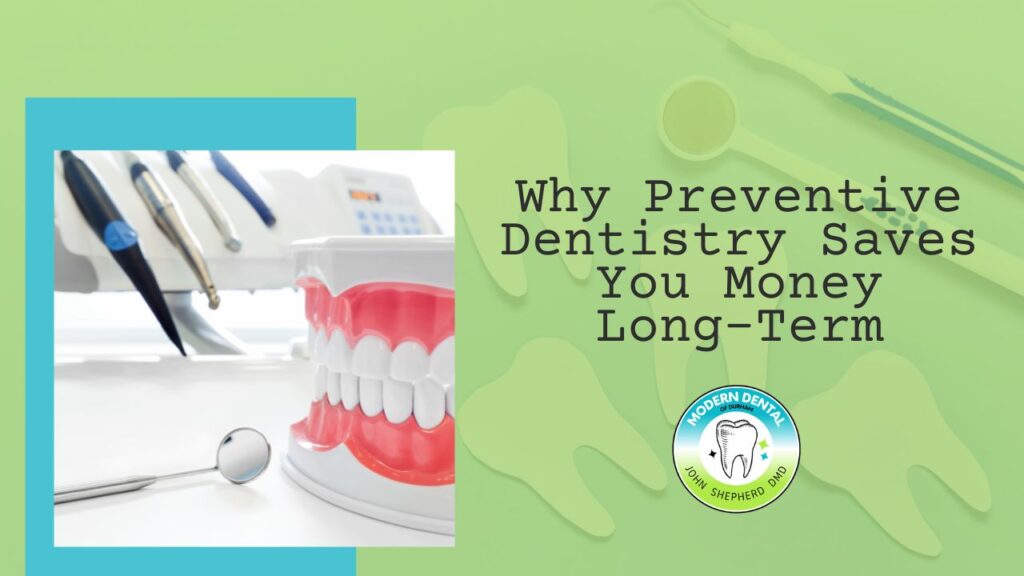
Most people think of dental visits as an expense. But when it comes to oral health, skipping preventive care often ends up costing far more in the long run. Preventive dentistry focuses on stopping problems before they become serious. Regular cleanings, exams, and early treatment can help you avoid complex procedures, reduce discomfort, and protect your overall health. What Is Preventive Dentistry? Preventive dentistry includes routine dental services designed to keep your teeth and gums healthy, such as: Professional dental cleanings Comprehensive dental exams Digital X-rays Fluoride treatments Oral cancer screenings Patient education on brushing and flossing These visits allow your dentist to identify small concerns before they turn into larger, more expensive problems. If you’re looking to stay ahead of dental issues, regular dental cleanings and exams are one of the most effective ways to maintain long-term oral health. Small Problems Are Less Expensive to Treat A tiny cavity may only require a simple filling. Left untreated, that same cavity can grow deeper and affect the inner part of the tooth. What starts as a minor issue can eventually lead to: Root canal therapy Dental crowns Tooth extraction Dental implants or bridges The earlier a problem is detected, the simpler and more affordable the treatment is likely to be. In many cases, early intervention can prevent the need for more extensive procedures such as root canal therapy or a dental crown. Preventing Gum Disease Can Protect Your Smile—and Your Wallet Gum disease is one of the leading causes of tooth loss in adults. Unfortunately, it often develops silently, with few noticeable symptoms in the early stages. Routine dental visits can help identify: Gum inflammation Bleeding gums Early bone loss Plaque and tartar buildup According to the Centers for Disease Control and Prevention (CDC), nearly half of adults age 30 and older have some form of periodontal disease, making prevention and early treatment especially important. Treating gum disease early is generally less costly and less invasive than managing advanced periodontal disease and replacing lost teeth. For patients who have experienced tooth loss, dental implants can restore function and appearance—but preventing the problem is always the more affordable option. Emergency Dental Care Is Often More Expensive Many dental emergencies begin as preventable issues. A cracked tooth, severe infection, or sudden toothache may require urgent treatment that could have been avoided through regular preventive care. Routine checkups allow your dental team to monitor your oral health and address concerns before they become painful emergencies. Preventive care helps reduce the risk of unexpected procedures, emergency appointments, and avoidable dental expenses. Oral Health Impacts Overall Health Research continues to show a strong connection between oral health and overall wellness. Poor oral health has been linked to: Heart disease Diabetes complications Respiratory conditions Chronic inflammation Maintaining healthy teeth and gums may contribute to better overall health and help reduce future healthcare costs. The CDC and American Dental Association both emphasize the importance of preventive care in maintaining lifelong oral health. Prevention Helps You Avoid Time Away From Work and Family Dental problems don’t just affect your budget—they can also disrupt your daily life. Preventive care can help reduce: Unexpected dental appointments Time off work School absences Stress caused by dental pain Regular visits are a small investment that can help you avoid bigger interruptions later. The Bottom Line Preventive dentistry is one of the smartest investments you can make in your health. Routine cleanings, exams, and early intervention can help prevent costly procedures, protect your smile, and support your overall well-being. At Modern Dental of Durham, we’re committed to helping patients maintain healthy smiles through comprehensive preventive care. By staying proactive today, you may save both time and money in the future. Whether you’re due for a cleaning or looking for a new dentist, our team offers comprehensive preventive care designed to keep your smile healthy for years to come. Ready to protect your smile? Schedule your next dental checkup and cleaning today: https://moderndentalofdurham.com/dental-appointment/
Dentist Near Me: 6 Things to Consider Before Choosing
Finding the right dentist isn’t just about choosing the closest office to your home. A great dental experience comes down to finding a practice that fits your needs, makes you feel comfortable, and offers the services and support you’re looking for. If you’ve recently searched for “dentist near me,” here are a few important things to consider before scheduling your first appointment. 1. Check the Services They Offer Not every dental office provides the same treatments. Some focus primarily on preventive care, while others offer services like dental implants, Invisalign, cosmetic dentistry, or restorative treatments. Choosing a practice that offers a wide range of services can make it easier to receive consistent care in one location. 2. Read Reviews and Look for Patterns Online reviews can provide valuable insight into patient experiences. Rather than focusing on a single review, look for recurring themes such as: Friendly staff Clear communication Comfortable appointments Clean office environment Long-term patient relationships These patterns often give a more accurate picture of what you can expect. 3. Consider Location and Convenience Regular dental visits are easier to maintain when your dentist is conveniently located near your home, work, or daily routine. Office hours, appointment availability, and emergency care options are also important factors to consider. 4. Ask About Payment and Insurance Options Dental care should feel accessible. Before choosing a dentist, ask about accepted insurance plans, financing options, or membership programs that may help reduce out-of-pocket costs. Cost transparency can help you plan for both routine visits and future treatment needs. 5. Pay Attention to Communication A good dentist should make you feel comfortable asking questions and discussing concerns. Whether you’re visiting for a routine cleaning or a more complex procedure, clear communication helps you feel informed and confident about your care. 6. Look for a Comfortable Office Environment Your experience starts the moment you walk through the door. A welcoming team, clean office, and patient-focused atmosphere can make a significant difference—especially if you feel nervous about dental visits. Finding the Right Dental Home Choosing a dentist is an important decision for your long-term oral health. Taking time to evaluate services, reviews, convenience, affordability, and patient experience can help you find a practice that fits your needs and makes routine dental care easier to maintain. At Modern Dental of Durham, we strive to provide comprehensive dental care in a welcoming environment while helping patients feel informed and comfortable throughout every step of their dental journey. Whether you’re new to the area or simply looking for a new dental home, finding the right dentist can make a lasting difference in your oral health and overall well-being.
Dental Implant: Can You Get One Years After Losing a Tooth?
A dental implant is often the best long-term solution for replacing a missing tooth. Many patients worry they’ve waited too long after tooth loss, but in many cases, a dental implant may still be possible years later. The good news? Even if you’ve been missing a tooth for several years, you may still be a candidate for a dental implant. Is It Ever Too Late for a Dental Implant? In many cases, no. Dental implants can often be placed years—even decades—after a tooth has been lost. The biggest factor isn’t how long ago the tooth was lost. It’s the health of the jawbone that supports the implant. When a tooth is missing, the bone in that area no longer receives stimulation from chewing. Over time, the jawbone can begin to shrink, a process known as bone resorption. That’s why a dental evaluation is important before implant treatment. What Happens Before a Dental Implant After Tooth Loss? After losing a tooth, several changes can occur: The jawbone may gradually shrink over time. Nearby teeth can begin to shift into the empty space. Your bite may become misaligned. Changes in bone structure can affect facial appearance. Additional wear may occur on surrounding teeth. The longer a tooth is missing, the more likely these changes are to happen. However, they don’t automatically rule out dental implants. Can You Get a Dental Implant If You’ve Lost Bone? Possibly, yes. Modern dentistry offers several solutions for patients who have experienced bone loss, including: Bone grafting procedures Advanced implant planning with 3D imaging Strategic implant placement techniques A CBCT scan allows your dentist to evaluate bone volume and determine whether additional treatment is needed before implant placement. Are You a Candidate for a Dental Implant? The best way to find out is through a comprehensive dental examination. Your dentist will evaluate: Bone density and volume Gum health Overall oral health Medical history The location of the missing tooth Every patient is different, which is why a personalized treatment plan is important. Why Replacing a Missing Tooth Matters Many people adapt to living with a missing tooth, but leaving the space untreated can contribute to: Ongoing bone loss Shifting teeth Bite problems Difficulty chewing Additional dental complications in the future Replacing a missing tooth can help restore function, comfort, and confidence in your smile. The Bottom Line If you’ve been missing a tooth for years, don’t assume you’ve missed your chance for a dental implant. Advances in dental technology and treatment options have helped many patients restore their smiles long after tooth loss. The first step is finding out what’s possible for your specific situation. Ready to Explore Your Options? At Modern Dental of Durham, we use advanced imaging and personalized treatment planning to help patients determine whether dental implants are the right solution for their needs. Learn more about our Dental Implant services. Schedule your consultation today:Modern Dental of Durham Appointment Request
How Often Should You Visit the Dentist? A Durham Dentist Explains
Why Regular Dental Visits Matter How often should you visit the dentist? Many people only schedule a dental visit when something hurts. Regular dental checkups help detect cavities, gum disease, and other oral health issues early. Regular dental checkups allow dentists to identify small problems before they become major issues. Cavities, gum disease, and enamel wear often develop slowly. Without routine exams, these conditions may go unnoticed until they require more complex treatment. At Modern Dental of Durham, preventive care is a key part of maintaining long-term oral health. Routine visits help ensure your smile stays healthy and strong. How Often Should You Visit the Dentist for a Checkup? For most people, dentists recommend visiting every six months for a dental checkup and professional cleaning. These visits allow your dentist to: Remove plaque and tartar buildup Check for early signs of cavities Monitor gum health Screen for oral health concerns Provide personalized dental advice Professional cleanings also help remove buildup that regular brushing and flossing cannot fully eliminate. Most dentists agree that how often you should visit the dentist depends on your oral health, lifestyle, and risk for dental problems. Some Patients May Need More Frequent Visits While twice a year works for many patients, some individuals benefit from more frequent dental visits. Your dentist may recommend additional appointments if you have: Gum disease or early signs of gum inflammation A history of frequent cavities Diabetes or other medical conditions affecting oral health Braces or other orthodontic appliances A weakened immune system Regular monitoring helps prevent complications and keeps treatment manageable. Understanding how often you should visit the dentist helps prevent cavities, gum disease, and expensive dental treatments later. What Happens During a Routine Dental Visit? A typical dental appointment includes both a professional cleaning and a thorough examination. During your visit, the dental team may: Examine your teeth and gums Remove plaque and tartar buildup Polish your teeth for a smooth finish Take dental X-rays when needed Discuss any oral health concerns These steps help ensure that potential problems are caught early, often before symptoms appear. Preventive Dentistry Saves Time and Money Preventive care is not just about protecting your smile. It can also help you avoid costly dental procedures in the future. Small issues such as minor cavities are much easier to treat when detected early. Without regular dental visits, these problems can develop into more serious conditions requiring fillings, crowns, or root canal treatment. Maintaining a consistent dental schedule helps reduce the risk of advanced dental problems. Signs You Should Schedule a Dental Visit Sooner Even if you recently had a checkup, certain symptoms should prompt a dental visit. Contact your dentist if you experience: Tooth pain or sensitivity Bleeding gums when brushing or flossing Persistent bad breath Loose or shifting teeth Jaw discomfort Early evaluation can help identify the cause and prevent the issue from worsening. Tips for Maintaining Good Oral Health Between Visits Dental visits are important, but daily habits also play a major role in oral health. To keep your teeth healthy between appointments: Brush your teeth twice a day Floss daily to remove plaque between teeth Limit sugary foods and drinks Drink plenty of water Replace your toothbrush every three to four months Combining strong daily habits with regular dental visits helps maintain a healthy smile. FAQ About Dental Visits Is visiting the dentist every six months really necessary? For most patients, yes. Routine visits allow dentists to detect issues early and provide professional cleaning that supports long-term oral health. What if my teeth feel fine? Dental problems do not always cause immediate symptoms. Regular checkups help identify concerns before they become painful or more complicated. Do children need dental checkups as often as adults? Yes. Children benefit from regular dental visits to monitor development and maintain healthy teeth as they grow. Protect Your Smile with Regular Dental Care Routine dental visits are one of the easiest ways to protect your oral health and prevent future problems. A consistent schedule allows dentists to monitor changes, address concerns early, and keep your smile looking its best. If it has been a while since your last dental checkup, scheduling an appointment can help you stay on track with your oral health. If you are looking for a trusted local dentist, learn more about preventive care at Modern Dental of Durham.
The Link Between Oral Health and Overall Health
The Link Between Oral Health and Overall Health: Why Your Mouth Matters More Than You Think The link between oral health and overall health is stronger than you think. When most people think about dental care, they think about teeth, gums, and their smile. But oral health is closely connected to your overall health, and what happens in your mouth can impact your entire body. How oral health affects the rest of your body Your mouth is the gateway to your body. Bacteria from untreated oral conditions can enter the bloodstream and contribute to inflammation elsewhere. Research has shown links between poor dental health and several systemic conditions, including: Heart disease Diabetes Respiratory infections Pregnancy complications According to the Centers for Disease Control and Prevention (CDC), gum disease has been associated with chronic health conditions that affect millions of adults in the United States. The connection between gum disease and heart health Gum disease (periodontitis) causes chronic inflammation. That inflammation doesn’t stay confined to the mouth. Studies suggest: Dental bacteria can enter the bloodstream Inflammation may contribute to plaque buildup in arteries Patients with gum disease may have a higher risk of cardiovascular issues The American Heart Association notes that while gum disease doesn’t directly cause heart disease, the two share common risk factors, and maintaining oral health is an important part of overall wellness. Oral health and diabetes: a two-way relationship Diabetes and dental health are closely linked, and each can affect the other. Diabetes can make it harder to fight oral infections Gum disease can make blood sugar harder to control Untreated oral infections may worsen diabetic complications The National Institutes of Health (NIH) reports that managing gum health can help improve blood sugar control in patients with diabetes. How Oral health impacts pregnancy and immune health Hormonal changes during pregnancy can increase the risk of gum inflammation. If left untreated, oral infections may affect pregnancy outcomes. Good oral care can help: Reduce the risk of pregnancy-related gum disease Support immune system health Lower the chance of oral infections spreading Routine dental checkups are considered safe and beneficial during pregnancy when coordinated with your healthcare providers. Why preventive dental care matters Regular dental visits help detect issues early, before they impact more than just your teeth. Preventive care supports: Early detection of gum disease Reduced inflammation in the body Better long-term health outcomes At Modern Dental of Durham, exams and cleanings are designed to protect both your smile and your overall health. Simple ways to support oral health and overall health Healthy habits make a difference. Patients are encouraged to: Brush twice daily with fluoride toothpaste Floss once a day Maintain regular dental checkups Address gum bleeding or discomfort early Share medical history changes with your dentist Dental health is not separate from your body, it’s part of it. Take a proactive step toward better health Your dental health plays a bigger role in your overall wellness than you might realize. Preventive care today can help reduce health risks tomorrow. 👉 Schedule a dental checkup with Modern Dental of Durham today Our team is here to support your smile, and your health, every step of the way.
The Truth About Bleeding Gums
The Truth About Bleeding Gums: What It Means & How to Stop It Have you ever noticed a little pink in the sink after brushing or flossing? While occasional bleeding gums might not seem like a big deal, they could be a sign of something more serious. Ignoring it could lead to bigger dental issues down the road. So, what causes bleeding gums, and how can you stop it? Let’s break it down. What do Bleeding Gums Mean? 1. Gingivitis – The Early Stage of Gum Disease One of the most common causes of bleeding gums is gingivitis, the earliest stage of gum disease. It happens when plaque (a sticky film of bacteria) builds up along the gumline, causing inflammation. Symptoms include: Red, swollen gums Bleeding when brushing or flossing Mild gum tenderness If left untreated, gingivitis can progress into periodontitis, a more serious gum disease that can lead to tooth loss. 2. Brushing Too Hard Aggressive brushing might seem like a good way to keep teeth clean, but it can actually harm your gums. Using a hard-bristled toothbrush or applying too much pressure can cause irritation and bleeding. A soft-bristled toothbrush and gentle, circular motions are the best approach. 3. Poor Flossing Habits If you only floss occasionally, your gums might bleed when you start doing it regularly. This is because they’re not used to the stimulation. The good news? If you keep up with daily flossing, your gums will strengthen and the bleeding should stop within a few days. 4. Vitamin Deficiencies A lack of vitamin C and vitamin K can make gums more prone to bleeding. These vitamins help with gum health and blood clotting, so a deficiency can make the issue worse. 5. Medications That Affect Blood Clotting Certain medications, like blood thinners (e.g., aspirin, warfarin), can make your gums more likely to bleed. If you’re noticing excessive bleeding, talk to your dentist or doctor about possible alternatives. 6. Hormonal Changes Pregnancy, menopause, and even puberty can make gums more sensitive due to hormonal changes. This can lead to increased inflammation and bleeding, a condition known as pregnancy gingivitis. How to Stop Bleeding Gums Brush with a Soft-Bristled Toothbrush – This helps prevent irritation while keeping your teeth clean. Floss Daily – Even if your gums bleed at first, regular flossing strengthens them over time. Use an Antibacterial Mouthwash – This helps kill bacteria and reduce inflammation. Look for mouthwashes with chlorhexidine or essential oils for the best results. Improve Your Diet – Eat more vitamin C-rich foods (oranges, strawberries, bell peppers) and vitamin K-rich foods (leafy greens, broccoli) to support gum health. Stay Hydrated – Drinking water helps wash away food particles and bacteria that can cause gum irritation. Schedule Regular Dental Checkups – A professional cleaning removes plaque and tartar buildup that brushing alone can’t handle. When to See a Dentist If your gums continue to bleed despite improving your oral care routine, or if you experience persistent bad breath, receding gums, or loose teeth, it’s time to see a dentist. These could be signs of advanced gum disease that require professional treatment. Final Thoughts Bleeding gums aren’t something to ignore, they’re a warning sign that your gums need attention. The good news? With proper oral hygiene and a few simple lifestyle changes, you can stop the bleeding and keep your gums healthy for years to come. Need a checkup? Schedule an appointment with us!
Common Causes of Tooth Pain
Why Does My Tooth Hurt? Common Causes of Tooth Pain and What to Do Tooth pain can stop you in your tracks. Whether it’s a dull ache, sharp jolt, or constant throbbing, tooth pain is your body’s way of telling you something’s wrong. Understanding the cause of your discomfort is the first step toward relief, and Modern Dental of Durham is here to help. In this post, we’ll explore the most common reasons your tooth might hurt, how to treat it, and when to call your dentist. Tooth Pain: Common Causes Not all toothaches are the same, and the cause can range from mild sensitivity to serious infection. Here are the most frequent culprits: 1. Tooth Decay (Cavities) Caused by plaque and bacteria breaking down enamel Pain usually increases with exposure to hot, cold, or sweet foods Can worsen if left untreated 2. Gum Disease (Gingivitis or Periodontitis) Inflammation or infection of the gums can cause aching teeth Often accompanied by bleeding, swelling, or receding gums May lead to bone and tooth loss if untreated 👉 Learn more about gum disease symptoms and treatment here 3. Tooth Abscess (Infection) A severe, throbbing pain caused by an untreated cavity or gum infection May come with swelling, fever, or a bad taste in the mouth Requires immediate dental care 4. Tooth Sensitivity Caused by worn enamel, exposed roots, or whitening products Pain triggered by hot, cold, sweet, or acidic foods and drinks Often treated with special toothpaste or fluoride treatments 5. Cracked or Fractured Tooth Pain when chewing or biting May be hard to spot without X-rays Can lead to further damage if not treated promptly 6. Impacted Wisdom Teeth Pain or pressure at the back of the jaw Swelling, redness, or difficulty opening the mouth Common in teens and young adults 7. Teeth Grinding (Bruxism) Can cause jaw soreness, headaches, and worn teeth Often occurs during sleep or stressful periods A mouthguard or stress management may help 8. Sinus Infection Sometimes sinus pressure can mimic tooth pain in the upper back teeth Often accompanied by nasal congestion or pressure around the eyes 9. Damaged Fillings or Dental Work Older or loose fillings/crowns can expose sensitive tooth structures Can cause sharp or throbbing pain with temperature changes When to See a Dentist Tooth pain that lasts more than a day or two, worsens over time, or comes with swelling or fever should never be ignored. 👉 According to the American Dental Association, timely dental care can prevent more serious complications and save your tooth. How Modern Dental of Durham Can Help Our compassionate team will perform a thorough evaluation to find the root cause of your tooth pain and recommend the best course of treatment. Whether you need a simple filling, root canal, or gum treatment, we’ll get you smiling again, pain-free. Tooth Pain: Don’t Wait, Get Relief Today If you’re dealing with tooth pain, don’t tough it out. Early treatment can prevent bigger problems (and bigger bills) later. 📞 Call Modern Dental of Durham at 919-544-3723 or request an appointment online at moderndentalofdurham.com/request-an-appointment
Can Your Gut Health Affect Your Smile?

Can Your Gut Health Affect Your Teeth? When you think about dental care, brushing and flossing might be the first things that come to mind. But did you know that your gut health could directly impact your teeth and gums? At Modern Dental of Durham, we take a holistic approach because oral health isn’t just about your mouth; it’s connected to your entire body. Let’s explore how your gut microbiome and dental health are more closely related than you might think, and what you can do to protect both. What Is Holistic Dental Health? Holistic dentistry focuses on the connection between your oral health and your overall well-being. Rather than treating isolated symptoms, we look at underlying causes, including lifestyle, nutrition, and gut health, to help you achieve lasting wellness. How Gut Health Affects Your Oral Health Your body is home to trillions of microorganisms, many of which live in your gut and your mouth. This ecosystem is called the microbiome, and it plays a vital role in regulating inflammation, supporting immunity, and even maintaining healthy teeth and gums. When your gut microbiome becomes unbalanced (a condition called dysbiosis), it can trigger inflammation throughout the body, including your mouth. Research shows that poor gut health is linked to: Gum disease (periodontitis) Tooth decay and cavities Bad breath (halitosis) Increased risk of infections Slower healing from dental procedures BONUS: What the Science Says About Oral and Gut Health Recent studies support the connection between gut health and oral health: A 2021 study in Frontiers in Cellular and Infection Microbiology found that an unhealthy gut microbiome can worsen gum disease and lead to more cavities. A 2023 review in the Journal of Oral Microbiology emphasized how oral and gut microbiota interact, affecting both inflammation and immunity. Other studies show that probiotics can reduce plaque, improve gum health, and restore microbial balance in the mouth. This growing body of research reinforces the value of taking care of your gut as part of a whole-body dental care strategy. How to Support Your Gut Health and Your Smile Looking to improve both gut and oral health? Here are some simple, science-backed tips: Eat whole, high-fiber foods (like vegetables, legumes, and whole grains) Avoid excess sugar and processed foods, which fuel harmful bacteria Include probiotics (such as yogurt, kefir, kimchi, or supplements) Drink plenty of water to support saliva and microbial balance Reduce stress, which impacts your microbiome and immune system Visit your dentist regularly for cleanings, checkups, and prevention Why Choose Holistic Dentistry in Durham? At Modern Dental of Durham, we go beyond the basics. Our team considers the full picture of your health, from gut issues to immune function, to help you get better results and feel your best. Whether you’re experiencing chronic gum issues, frequent cavities, or just want a more wellness-focused approach to dental care, we’re here to support you with personalized, whole-body solutions. Your Next Step to a Healthier Smile Your gut and your gums are more connected than you may realize—and caring for both can help you feel better from the inside out. Schedule your holistic dental consultation at Modern Dental of Durham today. Let’s work together to create a customized plan for lasting oral and whole-body health